Tpms Accuracy Explained
Maintaining the correct tire pressure is one of the most fundamental aspects of vehicle safety, performance, and longevity. While modern vehicles come equipped with a Tire Pressure Monitoring System (TPMS) designed to alert you to under-inflated tires, many drivers wonder just how accurate these systems truly are. Can you rely solely on your TPMS for critical tire pressure information, or should you still be checking manually?
In this article
This article will delve deep into the world of TPMS accuracy, explaining the technologies involved, the factors that can influence their readings, and practical steps you can take to ensure your system provides the most reliable information. We’ll explore the nuances of direct and indirect TPMS, discuss environmental impacts, and uncover common reasons for discrepancies, equipping you with the knowledge to drive safer and smarter.
Understanding TPMS: The Basics of Tire Pressure Monitoring
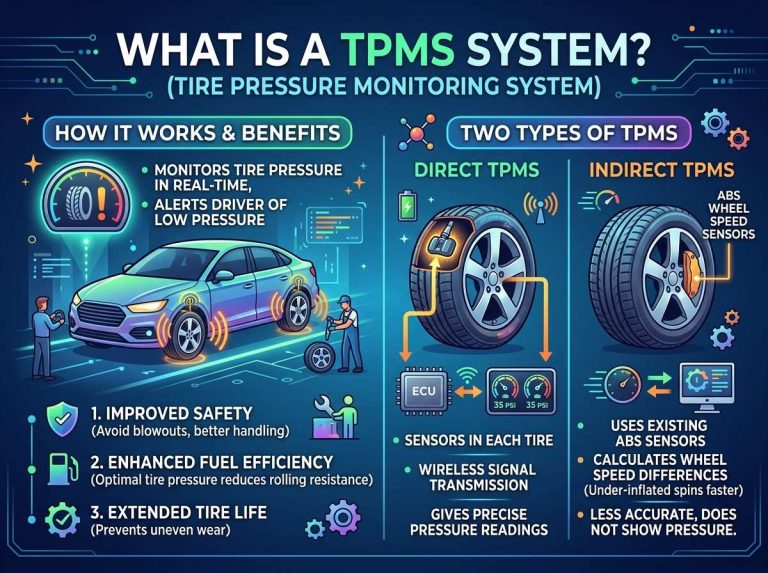
A Tire Pressure Monitoring System (TPMS) is an electronic system designed to monitor the air pressure inside the pneumatic tires on various types of vehicles. Its primary purpose is to warn the driver when tire pressure falls significantly below the recommended level, which can lead to unsafe driving conditions.
Since 2007, TPMS has been mandated in all new passenger vehicles sold in the United States, a direct response to concerns about tire-related accidents. The system provides a crucial layer of safety, helping to prevent accidents caused by tire blowouts, reduced handling, and increased stopping distances. Beyond safety, maintaining proper tire pressure also contributes significantly to fuel efficiency and extends the lifespan of your tires. Under-inflated tires increase rolling resistance, forcing your engine to work harder and consume more fuel, while also causing uneven wear patterns that shorten tire life.
Direct vs. Indirect TPMS: How They Measure Pressure
Not all TPMS systems are created equal. There are two primary types, each with distinct mechanisms for measuring and reporting tire pressure, which inherently affects their accuracy and responsiveness.
Direct TPMS: The Gold Standard for Accuracy
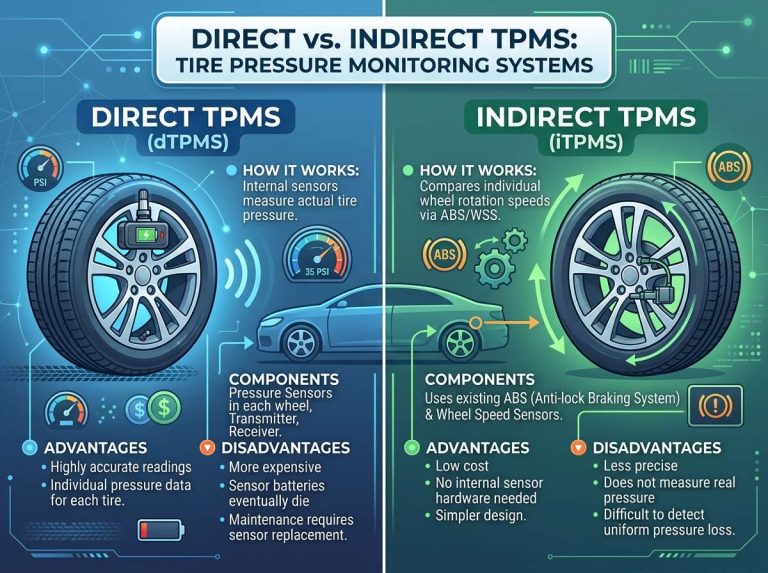
Direct TPMS is the more common and generally more accurate system. It utilizes individual pressure sensors mounted inside each tire, typically attached to the valve stem. These sensors constantly measure the actual air pressure and temperature within each tire. This data is then transmitted wirelessly (via radio frequency) to a central receiver in the vehicle.
Key characteristics of Direct TPMS:
- Real-time Readings: Provides instantaneous and precise pressure readings for each tire.
- Specificity: Can identify which specific tire is under-inflated.
- Responsiveness: Alerts the driver almost immediately to significant pressure drops, even when the vehicle is stationary.
- Temperature Monitoring: Many direct sensors also monitor tire temperature, which is a critical factor in understanding tire pressure dynamics.
- Installation: Requires the sensor to be physically installed inside the tire, often integrated with the valve stem. This means tire changes or repairs can sometimes affect the sensor.
The accuracy of a direct TPMS largely depends on the quality of the sensor, its battery life, and proper installation. These systems are highly reliable when functioning correctly, offering drivers the most granular data about their tire health.
Indirect TPMS: Leveraging ABS Sensors
Indirect TPMS does not use physical pressure sensors inside the tires. Instead, it relies on the vehicle’s Anti-lock Braking System (ABS) wheel speed sensors. The principle is based on the fact that an under-inflated tire has a slightly smaller circumference than a properly inflated one. This smaller circumference causes the under-inflated tire to rotate at a slightly different speed compared to the other tires when traveling at the same vehicle speed.
Key characteristics of Indirect TPMS:
- No Physical Sensors: Does not require individual tire sensors, making it less expensive to manufacture and maintain in terms of sensor replacement.
- Inferred Pressure: It doesn’t measure actual pressure but infers a pressure drop based on rotational speed differences.
- Less Precise: Generally less accurate and responsive than direct TPMS. It typically only detects significant pressure drops (e.g., 25% below recommended pressure).
- Calibration Required: Needs to be recalibrated after tire rotations, tire replacements, or manual pressure adjustments to establish a new baseline.
- Only While Moving: Can only detect pressure differences when the vehicle is in motion.
- Cannot Identify Specific Tire: Often cannot tell you which tire is under-inflated, only that a tire is.
While indirect TPMS offers a cost-effective solution, its accuracy is inherently limited by its reliance on inference and the need for regular recalibration. It serves as a good general warning system but doesn’t offer the same level of precision or immediate feedback as direct TPMS.
Factors Influencing TPMS Accuracy
Several elements can impact the precision and reliability of your TPMS, whether it’s a direct or indirect system. Understanding these factors is key to interpreting your TPMS warnings correctly.
Temperature Fluctuations and Their Impact
Temperature is arguably the most significant external factor affecting tire pressure and, consequently, TPMS readings. Air expands when heated and contracts when cooled. For every 10-degree Fahrenheit (or approximately 5.5-degree Celsius) change in ambient temperature, tire pressure can change by about 1 PSI (pounds per square inch).
- Cold Weather: As temperatures drop, tire pressure will naturally decrease. If you set your tire pressure on a warm day and then experience a significant cold snap, your TPMS might trigger a warning even if no air has actually leaked from the tire. The pressure has simply dropped due to the colder air inside.
- Hot Weather & Driving: Conversely, driving generates friction and heat, causing the air inside your tires to warm up and expand, increasing pressure. This is normal and why tire pressure should always be checked when tires are “cold” (before driving or after sitting for at least three hours).
- Sunlight: Even direct sunlight on one side of the vehicle can heat those tires more than the shaded ones, leading to slight pressure discrepancies.
Direct TPMS sensors often include temperature compensation, but extreme or sudden changes can still lead to alerts.
Altitude Changes and Atmospheric Pressure
While less impactful than temperature, significant changes in altitude can also subtly affect tire pressure readings. As you ascend, atmospheric pressure decreases. This lower external pressure can cause the internal pressure of your tires to exert more force outwards, leading to a slight increase in the absolute pressure reading, even though the amount of air inside the tire hasn’t changed. For most daily driving, this effect is negligible, but it can be a factor if you frequently drive through mountainous regions.
Sensor Quality and Calibration
The quality of the TPMS sensors themselves plays a crucial role in accuracy.
- OEM vs. Aftermarket: Original Equipment Manufacturer (OEM) sensors are designed specifically for your vehicle and generally offer the best compatibility and reliability. Aftermarket sensors can vary widely in quality. While some are excellent, others might be less precise or have shorter lifespans.
- Proper Installation: Incorrect sensor installation, whether it’s not seated properly or damaged during a tire change, can lead to inaccurate readings or complete sensor failure.
- Calibration: Direct TPMS sensors need to be “learned” or “reprogrammed” to the vehicle’s computer, especially after replacement or sometimes after tire rotations. Indirect TPMS systems require manual recalibration by the driver after any tire service or pressure adjustment to establish a new baseline. Failure to calibrate will result in inaccurate or non-functional warnings.
Sensor Battery Life and Aging
Direct TPMS sensors are battery-powered, and these batteries have a finite lifespan, typically 5-10 years. As the battery ages and weakens, the sensor’s ability to transmit accurate data reliably diminishes. A low battery can lead to intermittent readings, false warnings, or the sensor failing altogether. Since the batteries are sealed within the sensor, the entire sensor must be replaced when the battery dies.
Tire-Related Factors
The condition and type of your tires can also influence TPMS accuracy:
- Tire Type and Size: Different tire constructions and sizes might have slightly different pressure dynamics. Using tires not recommended by the manufacturer can sometimes affect how the TPMS system behaves.
- Wheel Damage: A bent rim or a poorly sealed bead can lead to slow air leaks, which the TPMS will eventually detect.
- Tire Sealants: Some tire sealants can damage TPMS sensors or clog their pressure ports, leading to inaccurate readings or sensor failure. It’s important to use TPMS-friendly sealants if necessary.
Common Causes of TPMS Inaccuracy and False Readings
It’s frustrating when your TPMS warning light comes on, but your tires appear perfectly fine. Here are some common reasons for these “false” alarms or inaccurate readings:
Improper Sensor Installation or Damage
During tire mounting, balancing, or repair, a TPMS sensor can be accidentally damaged or improperly installed. If a sensor isn’t seated correctly or if its valve stem is compromised, it can lead to leaks or incorrect readings. Similarly, using the wrong tools or excessive force can crack the sensor housing or damage its internal components.
Low Sensor Battery
As mentioned, direct TPMS sensors run on batteries. When a battery is nearing the end of its life, it might transmit weak or intermittent signals, leading to the TPMS warning light flickering on and off, or giving erroneous readings before failing completely. This is a common cause of TPMS issues in older vehicles.
Electromagnetic Interference
While rare, strong electromagnetic fields from certain electronic devices or power lines could potentially interfere with the wireless signal transmission from direct TPMS sensors to the vehicle’s receiver. This is generally not a sustained issue but could cause temporary anomalies.
Sudden Temperature Changes
Imagine parking your car in a heated garage overnight and then driving out into freezing winter temperatures. The rapid drop in ambient temperature will cause the air inside your tires to contract quickly, leading to an immediate drop in PSI. Your TPMS might trigger an alert even if the tires were perfectly inflated in the warmer garage. Conversely, a sudden spike in temperature can cause pressure to rise.
Recalibration Needs After Tire Service
Both direct and indirect TPMS systems often require attention after tire service:
- Direct TPMS: After rotating tires, replacing a sensor, or installing new tires, the vehicle’s computer needs to “learn” the new sensor IDs and their locations. Without this reprogramming or “relearn” procedure, the system might display incorrect tire locations or fail to read new sensors.
- Indirect TPMS: Any time you adjust tire pressure, rotate tires, or replace them, an indirect system needs to be manually recalibrated by the driver. This sets a new baseline for the system to monitor wheel speeds. Failing to recalibrate means the system will be comparing current wheel speeds against an outdated baseline, leading to inaccurate warnings.
How to Verify and Improve TPMS Accuracy
While your TPMS is a valuable safety feature, it shouldn’t be your only source of tire pressure information. Proactive measures can ensure its accuracy and your peace of mind.
Manual Pressure Gauge Checks: Your Best Ally
The most reliable way to verify your TPMS readings is to regularly check your tire pressure with a high-quality, accurate manual tire pressure gauge.
- Invest in Quality: Digital gauges are generally easier to read and often more precise than pencil-style gauges. Look for a gauge with a good reputation.
- Check Cold: Always check your tires when they are “cold” – meaning they haven’t been driven for at least three hours, or for more than a mile at low speed. Driving heats the tires and increases pressure, leading to inaccurate cold readings.
- Compare Readings: If your TPMS light is on, check all four tires with your manual gauge. Compare these readings to the recommended pressure found on the sticker inside your driver’s side door jamb (not the maximum pressure listed on the tire sidewall). If your manual gauge shows a significant discrepancy with the TPMS, it might indicate a sensor issue.
Regular TPMS System Checks and Maintenance
Just like other vehicle components, your TPMS benefits from periodic professional attention.
- Professional Diagnostics: If you suspect a TPMS issue, have a professional technician diagnose the system. They have specialized diagnostic tools that can read sensor data directly, identify faulty sensors, and perform relearn procedures.
- Sensor Replacement: When a direct TPMS sensor battery dies or the sensor is damaged, it needs to be replaced. This often involves removing the tire from the rim, replacing the sensor, and then reprogramming the new sensor to the vehicle.
- Valve Stem Service: The valve stem components (cap, core, grommet, nut) associated with direct TPMS sensors can degrade over time. Many tire shops recommend replacing these service kits whenever new tires are installed, even if the sensor itself isn’t replaced, to ensure a good seal.
Proper Tire Inflation Practices
The foundation of accurate TPMS operation is properly inflated tires.
- Follow Manufacturer Recommendations: Always inflate your tires to the pressure specified by your vehicle manufacturer, not the maximum pressure listed on the tire sidewall.
- Consistent Checks: Make it a habit to check your tire pressure manually at least once a month, and before long trips. This helps catch slow leaks before your TPMS even triggers a warning.
- Adjust for Conditions: While most drivers stick to the recommended cold pressure, some specific driving conditions (e.g., heavy loads, track driving) might warrant slight adjustments, but always within safe limits and manufacturer guidelines.
Understanding TPMS Warning Lights
Your vehicle’s dashboard might display two types of TPMS warnings:
- Solid Light: A solid TPMS warning light typically indicates that one or more tires are significantly under-inflated (usually 25% below recommended pressure). This requires immediate attention.
- Flashing Light: A flashing TPMS light, which eventually turns solid, usually signifies a malfunction within the TPMS system itself – a faulty sensor, a communication error, or a system needing recalibration. This means the system cannot accurately monitor tire pressure, and you should not rely on it.
The Role of Professional Service in Maintaining TPMS Accuracy
While basic tire pressure checks can be done at home, maintaining the optimal accuracy and functionality of your TPMS often requires professional expertise.
When to Seek Professional Help
It’s wise to consult a qualified technician for TPMS issues in several scenarios:
- Persistent Warning Light: If your TPMS warning light remains on after you’ve checked and adjusted your tire pressures manually.
- Flashing TPMS Light: A flashing light indicates a system malfunction, which almost always requires diagnostic tools to pinpoint the problem.
- After Tire Replacement or Rotation: While some vehicles can self-relearn, many direct TPMS systems require a specific relearn procedure after tire service to ensure sensors are correctly identified and located.
- Suspected Sensor Failure: If a manual gauge shows a correct pressure but the TPMS reports an anomaly for that specific tire, the sensor might be faulty.
- Valve Stem Damage: If a TPMS valve stem is bent, corroded, or leaking.
TPMS Sensor Replacement and Programming
Replacing a direct TPMS sensor is not a simple task for the average DIY mechanic. It typically involves:
- Tire Removal: The tire must be completely removed from the wheel to access the sensor.
- Sensor Replacement: The old sensor is carefully removed, and a new one is installed, ensuring proper sealing.
- Tire Remounting and Balancing: The tire is then remounted and rebalanced.
- Programming/Relearn: The new sensor’s unique ID needs to be programmed or “relearned” to the vehicle’s computer. This often requires specialized TPMS diagnostic tools that can communicate with the vehicle’s ECU (Engine Control Unit) and the new sensor. Without proper programming, the new sensor won’t communicate with your vehicle, and the warning light will persist.
Diagnostic Tools and Expertise
Professional automotive technicians have access to sophisticated TPMS diagnostic tools. These tools can:
- Activate Sensors: Wake up dormant sensors.
- Read Sensor IDs: Retrieve the unique identification numbers of each sensor.
- Check Battery Status: Some tools can estimate the remaining battery life of a sensor.
- Perform Relearn Procedures: Guide the technician through the specific relearn process for your vehicle make and model.
- Troubleshoot System Errors: Identify communication issues between sensors and the vehicle’s receiver.
Relying on professionals ensures that TPMS components are handled correctly, new sensors are properly integrated, and your system provides accurate, reliable information.
Benefits of a Properly Functioning and Accurate TPMS
An accurate and well-maintained TPMS offers far more than just a dashboard light; it’s a cornerstone of vehicle safety and operational efficiency.
Enhanced Driving Safety
This is the primary benefit. Correct tire pressure ensures optimal tire contact with the road, leading to:
- Improved Handling: Responsive steering and better control, especially in emergency maneuvers.
- Shorter Stopping Distances: Properly inflated tires grip the road more effectively, reducing the distance needed to stop.
- Reduced Risk of Blowouts: Under-inflated tires generate excessive heat, which is a leading cause of tire failure and dangerous blowouts. TPMS alerts help prevent this.
- Better Stability: Especially crucial for SUVs and trucks, correct tire pressure maintains vehicle stability, reducing the risk of rollovers.
Improved Fuel Economy
Tires that are under-inflated by even a few PSI increase rolling resistance. This means your engine has to work harder to move the vehicle, consuming more fuel.
- Significant Savings: Maintaining proper pressure can improve fuel efficiency by up to 3% or more. Over the lifespan of a vehicle, this translates to substantial savings at the pump.
- Reduced Emissions: Less fuel consumption also means fewer greenhouse gas emissions, contributing to a smaller environmental footprint.
Extended Tire Lifespan
Under-inflation or over-inflation causes tires to wear unevenly and prematurely.
- Under-inflation: Leads to excessive wear on the outer edges of the tire tread.
- Over-inflation: Causes wear primarily in the center of the tread.
- Optimal Wear: A properly inflated tire distributes pressure evenly across its contact patch, maximizing its lifespan and ensuring you get the full mileage out of your investment. TPMS helps you catch pressure issues early, allowing you to correct them before significant wear occurs.
Debunking TPMS Myths and Misconceptions
Despite its widespread use, TPMS is still subject to several common misconceptions.
“TPMS is always perfectly accurate.”
Myth: While direct TPMS is quite precise, no system is “perfectly” accurate. Factors like rapid temperature changes, sensor aging, and calibration issues can all introduce minor discrepancies. Moreover, indirect TPMS is inherently less precise, relying on inference rather than direct measurement. It’s crucial to remember that TPMS is a warning system, not a precision measurement tool for daily checks.
“You don’t need to check tires manually if you have TPMS.”
Myth: This is a dangerous misconception. TPMS is designed to alert you to significant pressure drops (typically 25% below recommended). A tire can be several PSI under-inflated and still not trigger the TPMS light. Even a few PSI can negatively impact fuel economy, tire wear, and handling. Regular manual checks (monthly and before long trips) with a reliable gauge are still essential for optimal tire health and safety.
“All TPMS systems are the same.”
Myth: As discussed, there are two distinct types: direct and indirect. They operate differently, have varying levels of accuracy and responsiveness, and require different maintenance procedures. Even within direct TPMS, there are variations in sensor technology, battery life, and relearn procedures across different vehicle manufacturers and models.
“TPMS sensors last forever.”
Myth: Direct TPMS sensors are battery-powered, and these batteries have a finite lifespan, typically 5-10 years. Once the battery dies, the entire sensor needs to be replaced. Additionally, sensors can be damaged during tire service or through impact. They are not indestructible components.
“You can ignore the TPMS light if the tires look fine.”
Myth: Never ignore a TPMS warning light. Even if a tire looks fine, it can still be significantly under-inflated. The TPMS is there for a reason – to alert you to a potential safety hazard. If the light is on, pull over safely, check your tire pressures, and address the issue promptly. Ignoring it puts you, your passengers, and other road users at risk.
Frequently Asked Questions
How often should TPMS sensors be replaced?
Direct TPMS sensors typically need replacement when their internal battery dies, which is usually every 5 to 10 years, or approximately 100,000 miles, depending on usage and battery quality. They may also need replacement if damaged during tire service or due to corrosion.
Can I reset my TPMS myself?
It depends on your vehicle and the type of TPMS. Many indirect TPMS systems allow for a manual reset (often a button press or a sequence in the infotainment system) after adjusting tire pressures. Direct TPMS systems, however, usually require a “relearn” procedure, which can sometimes be initiated by following specific driving patterns, but often requires a professional diagnostic tool, especially after a sensor replacement or tire rotation.
Does extreme weather affect TPMS readings?
Yes, absolutely. Temperature is the most significant factor affecting tire pressure. Cold weather causes tire pressure to drop, potentially triggering a TPMS warning, while hot weather or prolonged driving can cause pressure to rise. For every 10°F change in ambient temperature, tire pressure can change by about 1 PSI.
What’s the difference between a solid TPMS warning and a flashing light?
A solid TPMS light typically indicates that one or more tires are significantly under-inflated (usually 25% below the recommended pressure). A flashing TPMS light (which may eventually turn solid) usually signals a malfunction within the TPMS system itself, such as a faulty sensor, a low sensor battery, or a system that needs recalibration. When it flashes, the system cannot accurately monitor tire pressure.
Is it okay to ignore a TPMS warning light?
No, it is never okay to ignore a TPMS warning light. The light indicates a potential safety hazard related to tire pressure. Driving on under-inflated tires can lead to reduced handling, increased stopping distances, poor fuel economy, premature tire wear, and a higher risk of dangerous tire blowouts. Always address a TPMS warning promptly.
Can TPMS sensors be repaired?
Generally, the internal electronic components of a TPMS sensor cannot be repaired. If a sensor is faulty or its battery dies, the entire sensor unit typically needs to be replaced. However, components of the valve stem assembly (like the valve core, cap, or rubber grommet) that are part of the sensor can sometimes be replaced individually if they are damaged or leaking, without replacing the entire sensor.
Final Verdict
The Tire Pressure Monitoring System (TPMS) is an invaluable safety feature designed to provide an early warning against under-inflated tires. While direct TPMS offers a high degree of accuracy and real-time data, and indirect TPMS provides a good general alert, neither system is a substitute for diligent, manual tire pressure checks. Factors like temperature fluctuations, sensor aging, and proper calibration significantly influence TPMS reliability.
To ensure you’re getting the most accurate information and maximizing your safety, fuel efficiency, and tire lifespan, integrate your TPMS with a proactive maintenance routine. Regularly check your tire pressures with a quality manual gauge, understand your vehicle’s specific TPMS type, and seek professional service for any persistent warnings or suspected system malfunctions. An accurate TPMS, coupled with responsible tire care, is your best defense against tire-related hazards on the road.

Peterson is an automotive safety enthusiast and product reviewer with a passion for helping drivers stay safe on the road. He researches and tests dash cams, backup cameras, TPMS systems, emergency tools, GPS trackers, and other vehicle safety products to provide honest, practical recommendations. Through CarSafeties.com, Peterson shares in-depth reviews, buying guides, and maintenance tips to help drivers make smarter and safer decisions.