Obd2 Freeze Frame Data Explained
When the check engine light illuminates on a vehicle’s dashboard, it signals a problem. To determine what went wrong, mechanics and car owners often turn to a powerful diagnostic tool: OBD2 freeze frame data explained. This data provides a crucial snapshot of the engine’s operating conditions at the exact moment a fault was detected.
In this article
This guide will clarify what freeze frame data is, how it works, and why it is so important for pinpointing car issues. Readers will learn how to access this information and interpret the various data points it contains.
Key Takeaways
- Freeze frame data records engine conditions at the moment a fault triggers the check engine light.
- It acts like a snapshot, capturing vital parameters such as engine speed, temperature, and fuel system status.
- This data helps diagnose problems by showing the circumstances under which the fault occurred.
- An OBD2 scanner is needed to access and view freeze frame data.
- Clearing diagnostic trouble codes (DTCs) will also erase the associated freeze frame data.
What is OBD2 Freeze Frame Data?
OBD2 freeze frame data is a set of stored values from various engine sensors. These values are captured and saved by the vehicle’s onboard computer, specifically the Engine Control Unit (ECU), at the precise instant a diagnostic trouble code (DTC) is set.
Think of it as an automatic recording. The moment the ECU detects a fault severe enough to turn on the check engine light, it takes a “picture” of all the relevant sensor readings. This picture is the freeze frame data.
A Snapshot of Your Engine’s Health
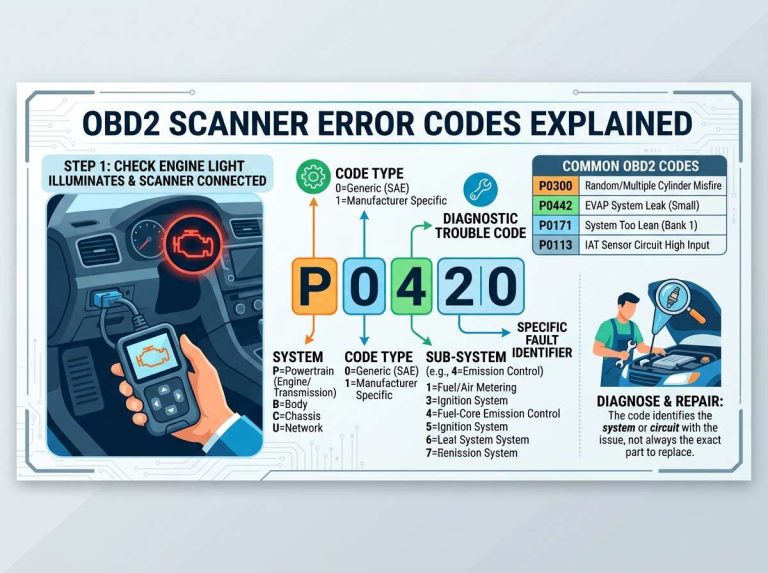
The purpose of this data is to provide context. A trouble code, such as P0301 for a cylinder 1 misfire, tells you what kind of problem occurred. However, it does not tell you when or under what conditions the problem happened.
Freeze frame data fills this gap. It provides details like the engine speed, coolant temperature, vehicle speed, and fuel trim values at the time of the fault. This information is invaluable for grasping the circumstances surrounding the problem.
How Does Freeze Frame Data Work?
Modern vehicles are equipped with an On-Board Diagnostics system, specifically OBD2. This system monitors various components for proper operation. When a component operates outside its normal range, the OBD2 system takes action.
The ECU continuously monitors signals from dozens of sensors throughout the engine and vehicle. It compares these signals against predetermined acceptable ranges. If a signal falls outside these ranges, a fault is detected.
When Your Check Engine Light Comes On
When the ECU detects a fault that could affect emissions or engine performance, it performs several actions. First, it stores a diagnostic trouble code (DTC) in its memory. This code points to the specific system or component that has a problem.
Second, the ECU illuminates the check engine light on the dashboard. This alerts the driver to an issue. Crucially, at the same moment the DTC is stored and the light comes on, the ECU also records the freeze frame data.
What Information Does It Record?
The specific parameters recorded in freeze frame data can vary slightly between vehicle manufacturers and models. Still, many common data points are almost always included. These parameters describe the engine’s state at the moment of the fault.
For example, it typically records engine RPM, vehicle speed, engine coolant temperature, and fuel system status. It also often includes short-term and long-term fuel trim values, manifold absolute pressure, and oxygen sensor readings.
Why is Freeze Frame Data Important for Diagnosing Car Problems?
Diagnosing car problems can be complex. A diagnostic trouble code alone might not provide enough information to identify the root cause. This is where freeze frame data becomes a critical tool.
It helps mechanics move beyond just knowing “what” happened to grasping “how” and “when” it happened. This context is essential for effective troubleshooting and repair.
Pinpointing the Problem’s Conditions
Imagine a scenario where a car has a misfire code (P0301). Without freeze frame data, a mechanic only knows there’s a misfire in cylinder 1. With the data, they might see that the misfire occurred at 3000 RPM, under heavy acceleration, and when the engine was at operating temperature.
This additional information changes the diagnostic approach. It suggests the problem might be related to conditions of high engine load or specific temperatures, rather than a constant issue. This helps rule out certain possibilities and focus on others.
Helping Mechanics Find Solutions Faster
By providing a snapshot of the operating conditions, freeze frame data guides the diagnostic process. It helps mechanics recreate the fault conditions in a controlled environment, if necessary.
This can save significant time and effort. Instead of guessing or performing a broad inspection, the mechanic can narrow down the potential causes based on the data. As a result, repairs can often be more accurate and efficient.
How to Access Freeze Frame Data
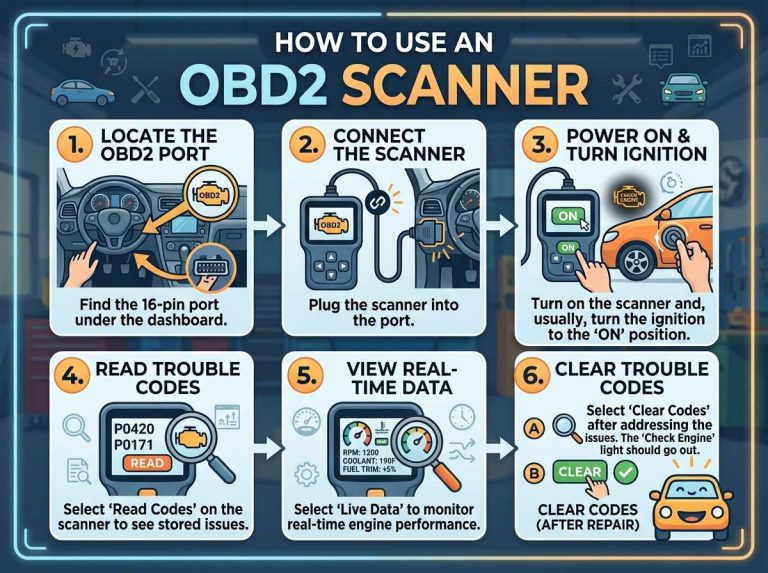
Accessing freeze frame data requires a specific tool. Vehicles with an OBD2 system have a standardized diagnostic port, usually located under the dashboard on the driver’s side. This port allows communication with the vehicle’s ECU.
The tool used to retrieve this information is an OBD2 scanner. These scanners range from simple code readers to advanced professional diagnostic devices.
Using an OBD2 Scanner
To access the data, an OBD2 scanner is connected to the vehicle’s diagnostic port. Once connected, the scanner establishes communication with the ECU. The user can then navigate through the scanner’s menu options to find the stored diagnostic trouble codes and associated freeze frame data.
Most scanners will first display any active or pending DTCs. After picking a specific DTC, there is usually an option to view its corresponding freeze frame data. The scanner then displays the recorded parameters on its screen.
What You See on the Scanner
When viewing freeze frame data on a scanner, you will typically see a list of parameters and their values. Each parameter is usually identified by an abbreviation or a short name, such as “RPM” for engine revolutions per minute or “ECT” for engine coolant temperature.
The values will be displayed in standard units, like degrees Celsius or Fahrenheit for temperature, or PSI for pressure. It is important to comprehend what each parameter represents to make sense of the data. Some advanced scanners may offer explanations for common parameters.
Reviewing the Data Points
Interpreting freeze frame data effectively requires a basic grasp of what each parameter signifies. While the list can be extensive, some data points appear frequently and are particularly useful for diagnostics.
Knowing what normal values look like for a healthy engine can also help identify anomalies in the freeze frame data. This comparison is key to diagnosis.
Common Parameters You’ll Find
- Engine RPM: Shows how fast the engine was rotating. High RPMs might indicate a problem under load.
- Vehicle Speed Sensor (VSS): Indicates the car’s speed. This helps determine if the fault occurred while stationary, cruising, or accelerating.
- Engine Coolant Temperature (ECT): Records the engine’s operating temperature. Problems occurring when the engine is cold versus fully warmed up can point to different issues.
- Fuel System Status: Shows if the fuel system was in “open loop” (cold engine, using rich fuel mix) or “closed loop” (warmed up, using oxygen sensor feedback).
- Short Term Fuel Trim (STFT) and Long Term Fuel Trim (LTFT): These values indicate how the ECU is adjusting fuel delivery. Significant deviations from zero can suggest issues with fuel delivery, air leaks, or sensor problems.
- Manifold Absolute Pressure (MAP) or Mass Air Flow (MAF): Measures air entering the engine. Abnormal readings can point to vacuum leaks or sensor malfunctions.
- Oxygen Sensor Voltage: Shows the efficiency of the catalytic converter and the richness/leanness of the exhaust gases.
Making Sense of the Numbers
Once you have the list of parameters and their values, the next step is to analyze them. Compare the recorded values to what would be considered normal operating conditions for your specific vehicle. For example, if the ECT is very low when a fault occurred, it might suggest a thermostat problem.
Look for correlations between different parameters. If the fuel trims are very high (adding a lot of fuel) and the MAP sensor reading is low (suggesting a vacuum leak), these two pieces of data together strengthen the suspicion of an air leak.
It is often helpful to consult a service manual or online resources for typical sensor values for your car’s make and model. This provides a baseline for comparison.
Common Mistakes When Using Freeze Frame Data
While freeze frame data is a powerful diagnostic tool, certain mistakes can hinder its effectiveness or lead to misdiagnosis. Being aware of these common pitfalls can help ensure accurate troubleshooting.
The most frequent errors often involve clearing codes prematurely or relying solely on the freeze frame data without considering other diagnostic information.
Clearing Codes Too Soon
One of the biggest mistakes is clearing diagnostic trouble codes (DTCs) before fully analyzing the freeze frame data. When a DTC is cleared, its associated freeze frame data is also erased from the ECU’s memory.
This means if the problem is intermittent and the check engine light comes on again, the original context of the first fault is lost. Always retrieve and save the freeze frame data before clearing any codes, especially if you are not immediately performing a repair.
Ignoring Other Diagnostic Information
Freeze frame data provides a snapshot, but it is not the only piece of the diagnostic puzzle. Relying solely on this data without considering other factors can lead to an incomplete or incorrect diagnosis. Other important information includes:
- Live Data: Real-time sensor readings that show how the engine is performing at the current moment.
- Technical Service Bulletins (TSBs): Manufacturer-issued documents that describe known problems and their solutions.
- Visual Inspection: Checking for obvious signs of damage, leaks, or loose connections.
- Driver’s History: Information from the driver about when and how the problem occurs.
A comprehensive diagnostic approach combines freeze frame data with these other sources of information for the most accurate assessment.
Frequently Asked Questions
Is freeze frame data always available?
Freeze frame data is only stored when the ECU detects a fault severe enough to set a diagnostic trouble code (DTC) and illuminate the check engine light. If no DTCs are present, there will be no freeze frame data to retrieve.
Can I clear freeze frame data?
Yes, clearing the diagnostic trouble codes (DTCs) with an OBD2 scanner will also clear the associated freeze frame data. It is important to retrieve and record this data before clearing codes, as it cannot be recovered once erased.
What is the difference between live data and freeze frame data?
Live data shows real-time sensor readings as the engine is currently operating. Freeze frame data, on the other hand, is a snapshot of sensor readings captured at the specific moment a fault occurred and a diagnostic trouble code was set.
Do all check engine lights trigger freeze frame data?
Yes, if the check engine light illuminates due to a diagnostic trouble code being set, freeze frame data will be recorded by the ECU. The data provides context for that specific fault code.
Should I try to fix the problem myself using freeze frame data?
While freeze frame data can help you grasp the problem, diagnosing and repairing complex automotive issues often requires specialized knowledge, tools, and experience. It is generally recommended to consult a qualified mechanic for proper diagnosis and repair.
Summing Up Freeze Frame Data
OBD2 freeze frame data is an indispensable tool in automotive diagnostics. It provides a vital snapshot of your engine’s operating conditions at the precise moment a fault occurs and the check engine light illuminates. This contextual information helps bridge the gap between knowing a problem exists and determining why it happened.
By learning how to access and interpret freeze frame data, car owners and mechanics can more effectively diagnose issues, leading to more accurate and efficient repairs. Always remember to retrieve this data before clearing any diagnostic trouble codes to preserve this valuable information for troubleshooting.

Peterson is an automotive safety enthusiast and product reviewer with a passion for helping drivers stay safe on the road. He researches and tests dash cams, backup cameras, TPMS systems, emergency tools, GPS trackers, and other vehicle safety products to provide honest, practical recommendations. Through CarSafeties.com, Peterson shares in-depth reviews, buying guides, and maintenance tips to help drivers make smarter and safer decisions.