
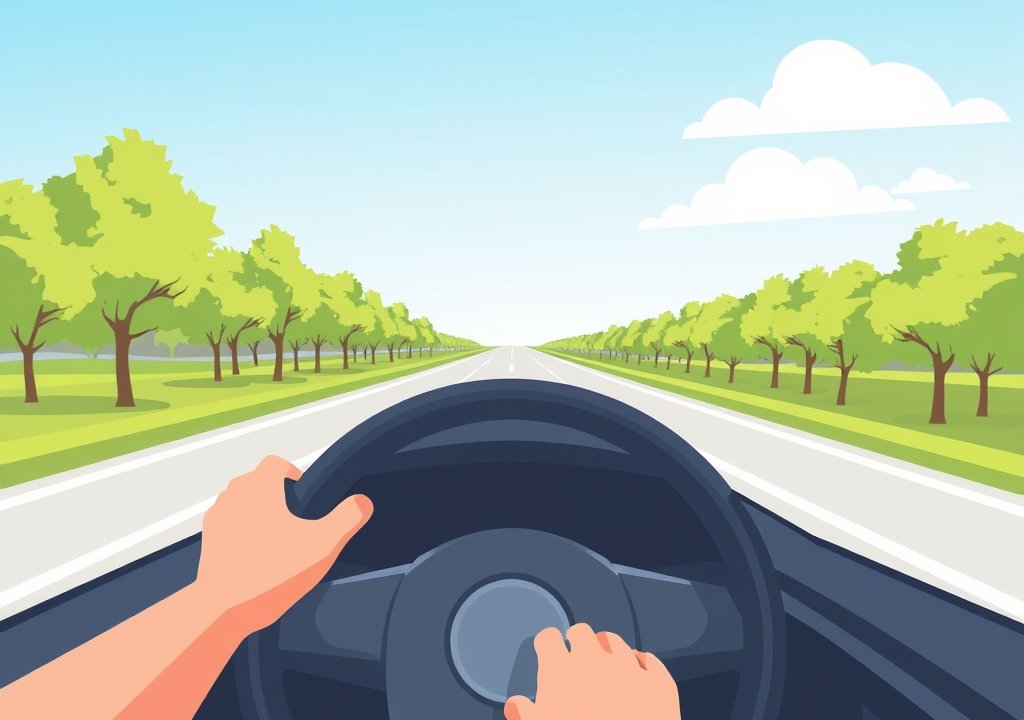
Defensive Driving Tips
Key Takeaways
- Defensive driving means expecting mistakes from others and planning ahead to avoid them.
- Keeping a safe following distance and scanning far ahead give you more time to react.
- Staying focused, avoiding phone use and driving calmly lower your risk on every trip.
- Practice good habits in quiet, low-pressure settings before you tackle busy roads.
What Defensive Driving Means for New Drivers
Defensive Driving Explained in Plain Terms
Defensive driving is a way of driving that focuses on safety before a problem appears. Instead of reacting only when something goes wrong, the driver watches for risks early. The goal is to avoid collisions, even when other people make errors.
A defensive driver assumes that others might not see them, might change lanes suddenly or might brake without warning. This mindset is not fear. It is a calm habit of staying prepared. Most beginners find that it becomes more natural with regular practice, especially when they make a point of reviewing each trip afterward and noting what they could have anticipated sooner.
Why Defensive Driving Matters on Everyday Roads
Many crashes happen during ordinary trips, not only on highways or in bad weather. A driver who is distracted for a few seconds can miss a stopped car or a pedestrian stepping off a curb. Defensive habits reduce the chance that a small lapse becomes a serious incident.
Think about a typical errand: a quick trip to the grocery store with cars backing out of parking spaces, children near crosswalks and drivers rushing to make a light. A defensive driver slows slightly in these areas, watches the spaces between parked cars and keeps a foot ready to brake. These small adjustments add up over hundreds of trips.
Good defensive driving also makes the drive less stressful. When you know what to watch for, you feel more in control. As a result, you can focus on the road instead of worrying about what might happen next.
The Core Principles of Safe Driving Habits
Keeping a Safe Following Distance
Following distance is the space you leave between your vehicle and the one ahead. A common guideline is to stay at least two seconds behind the car in front in normal conditions. You can measure this by watching a fixed object, such as a sign or a tree, pass the car ahead and then counting the seconds until you pass it yourself.
In rain, snow or at night, more space is usually wise. Leaving extra room gives you time to brake gently. Because of this, you are less likely to skid or stop suddenly. If a tailgater is behind you, do not respond by closing the gap in front. Instead, keep your distance and ease off the accelerator so you have room to stop smoothly.
Scanning Ahead and Checking Your Mirrors
Good drivers look well down the road, not just at the car in front. Scanning ahead helps you spot brake lights, merging traffic and hazards early. A useful habit is to look roughly 12 to 15 seconds ahead of your position, though this will vary with speed. At higher speeds, you need to look farther ahead to give yourself enough time.
Mirrors matter just as much. Check them regularly, and glance over your shoulder before changing lanes. This habit helps you see vehicles that may be hiding in a blind spot, such as a motorcycle alongside your rear quarter. Many drivers find it helpful to check the mirrors every few seconds in heavy traffic.
Anticipating What Other Drivers Might Do
Anticipation means thinking about what another driver could do next. A car drifting near the lane line may be about to change lanes. A driver who slows suddenly near a parking area may be looking for a space.
You cannot read minds, but you can notice clues. Signals, speed changes and head movements often reveal intentions. A driver glancing repeatedly at a side street may be preparing to pull out. Still, never assume another driver will act a certain way. Keep your options open and be ready to adjust your speed or position if their behavior changes.
Step-by-Step Defensive Driving Tips for Beginners
Preparing Yourself Before You Drive
Good habits start before the engine runs. Adjust your seat, mirrors and steering wheel so you can reach the controls easily and see clearly. Check that the mirrors show the lanes beside you with as little blind spot as possible.
Set your route and any navigation device before you move off, so you are not searching for directions while driving. Enter your destination, choose a voice option if your device has one, and confirm the first turn before you leave.
Also check that you are fit to drive. Fatigue, strong medication effects or stress can slow your reactions. If you feel unwell or very tired, it is often safer to rest first or ask someone else to drive.
Managing Speed, Space and Visibility
Drive at a speed that suits the road, the traffic and the weather. The posted limit is the maximum, not always the safest speed. In heavy rain or fog, slowing down is a sensible choice that gives you more time to see and react.
Keep a safe following distance from the vehicle ahead. A common guideline is the three-second rule: pick a fixed point, and make sure you pass it at least three seconds after the car in front passes it. Increase that gap in bad weather or on wet roads.
Keep your headlights on when visibility drops, and clean your windshield so the glass stays clear. Dirty or streaked glass can add glare, especially at night, so keep your wipers and washer fluid in good order.
Handling Intersections, Merges and Lane Changes
Intersections are among the most common places for collisions. Slow down as you approach, and look both ways even when your light is green. Watch for drivers who may run a signal or turn across your path, and be ready to stop if someone does.
Merging and changing lanes require patience. Signal early, check your mirrors and look over your shoulder to catch vehicles in your blind spot. If the gap is not clearly safe, wait for a better one. In short, never rush a lane change.
Staying Alert in Bad Weather and at Night
Rain, snow and darkness reduce what you can see and how well your tires grip the road. Brake earlier and accelerate more gently than you would in clear conditions. Keep your speed steady and avoid sudden steering, since a quick movement can cause a skid on a slippery surface.
At night, use your headlights properly and watch for pedestrians, cyclists and animals near the road. Dim your high beams when you are close to another vehicle, so you do not blind the other driver. Glare from oncoming traffic can be tiring, so look toward the right edge of the lane when a vehicle passes. Still, stay focused on the full scene around you.
Common Mistakes That Reduce Driving Safety
Distracted Driving and Phone Use
Distracted driving means doing anything that pulls your attention away from the road. Texting, scrolling, eating or adjusting a device all take focus. Even a short glance away can cover a long distance at highway speed, since a car travelling at 100 kilometres per hour covers almost 28 metres every second.
A simple rule helps. Set your phone to a do-not-disturb mode, or place it out of reach before you start the engine. Pull over safely if you need to make a call or check a message, rather than trying to do it at a red light or in slow traffic.
Tailgating, Speeding and Aggressive Habits
Tailgating leaves too little space to stop safely. Speeding shortens the time you have to react and increases the force of a crash. Aggressive habits, such as weaving between lanes or flashing lights at other drivers, often raise the risk for everyone on the road.
Calm driving is a practical defense. When another driver pushes you, let them go. Your goal is to arrive safely, not to win a race, and a few extra seconds on the journey cost far less than a collision.
Real-Life Examples of Defensive Driving in Action
Responding to a Sudden Stop Ahead
Imagine the car ahead brakes hard because a deer runs onto the road. A driver with a safe following distance has time to slow smoothly and keep control of the vehicle. A tailgating driver may have to brake suddenly, which can cause a rear-end collision.
A common guideline is to leave at least a two-second gap behind the car ahead in normal conditions, and more in rain, at night or on wet roads. Drivers can measure this by watching the vehicle ahead pass a fixed object, such as a sign, and counting the seconds until they pass the same point.
The lesson is simple. Space and attention give you options. Without them, a small event can turn into a serious one.
Spotting a Driver in a Blind Spot
A driver planning to change lanes on a multi-lane road may not notice a car beside them. A defensive driver checks the mirror, then looks over the shoulder before moving. If a vehicle is hidden in the blind spot, the driver waits.
This small check takes only a moment. It prevents many sideswipe collisions, especially on busy highways where vehicles travel close together in adjacent lanes.
Defensive Driving Versus Other Driving Approaches
Defensive Driving Compared With Aggressive Driving
Aggressive driving focuses on speed, quick lane changes and pressing other drivers to move. Defensive driving focuses on space, timing and early planning. Aggressive drivers often save only seconds, while defensive drivers usually avoid the emergencies that cause the most damage.
Both styles may get you to the same destination. However, the defensive approach generally carries less risk for you and others on the road. It also tends to reduce stress, since fewer situations demand sudden reactions.
Defensive Driving Compared With Basic Rule-Following
Following traffic laws is essential, but it is not always enough. A driver can obey the speed limit and still drive too close to the car ahead or ignore a pedestrian who looks likely to step out. Defensive driving adds awareness on top of the rules.
On the other hand, rules give you a clear baseline. Defensive habits help you handle the moments the rules do not fully cover, such as glare from a low sun, a driver drifting within their lane or a child chasing a ball near the curb.
Building Defensive Driving Skills Over Time
Practicing Good Habits on Quiet Roads First
Beginners often learn best on quiet streets or empty parking areas
…
Peterson is an automotive safety enthusiast and product reviewer with a passion for helping drivers stay safe on the road. He researches and tests dash cams, backup cameras, TPMS systems, emergency tools, GPS trackers, and other vehicle safety products to provide honest, practical recommendations. Through CarSafeties.com, Peterson shares in-depth reviews, buying guides, and maintenance tips to help drivers make smarter and safer decisions.


One Comment