Tpms Sensor Compatibility Guide
The illuminated TPMS warning light on your dashboard can be a source of frustration, often signaling a problem with your tire pressure monitoring system. While low tire pressure is the most common culprit, sometimes the issue lies with a faulty TPMS sensor itself. Replacing these sensors seems straightforward, but the world of TPMS sensor compatibility is surprisingly complex. Choosing the wrong sensor can lead to constant warning lights, incorrect readings, or even an entirely non-functional system, leaving you back at square one.
In this article
This comprehensive guide is designed to demystify TPMS sensor compatibility. We’ll explore the different types of sensors, the critical factors that dictate whether a sensor will work with your vehicle, common mistakes to avoid, and practical tips to ensure you select the correct replacement every time. By the end, you’ll have a clear understanding of what it takes to keep your tire pressure monitoring system operating flawlessly.
What is TPMS and Why is it Important?
The Tire Pressure Monitoring System (TPMS) is a vital safety feature in modern vehicles, mandated in the United States since 2007. Its primary function is to monitor the air pressure inside your vehicle’s tires and alert you if pressure drops to an unsafe level. This real-time monitoring helps prevent accidents caused by underinflated tires, which can lead to poor handling, increased stopping distances, premature tire wear, and reduced fuel efficiency.
Direct vs. Indirect TPMS: A Fundamental Difference
Understanding the two main types of TPMS is the first step in appreciating compatibility nuances:
- Direct TPMS: This system uses individual pressure sensors mounted inside each tire, usually attached to the valve stem. These sensors directly measure the air pressure and temperature within the tire and transmit this data wirelessly to the vehicle’s onboard computer (ECU). Direct TPMS is highly accurate and can identify which specific tire has low pressure. This is the type of system where sensor compatibility is a critical concern.
- Indirect TPMS: This system does not use physical sensors in the tires. Instead, it relies on the anti-lock braking system (ABS) wheel speed sensors. When a tire loses pressure, its rolling radius decreases, causing it to rotate at a slightly different speed than the other tires. The ABS system detects this discrepancy and triggers a warning. Indirect TPMS is generally less accurate, cannot specify which tire is low, and doesn’t require specific tire pressure sensors, thus eliminating compatibility issues related to sensors.
This article focuses exclusively on direct TPMS sensor compatibility, as this is where the complexity lies.
Key Factors Influencing TPMS Sensor Compatibility
When selecting a replacement TPMS sensor, several critical factors determine whether it will communicate correctly with your vehicle’s TPMS module. Ignoring any of these can lead to compatibility headaches.
Frequency Bands: 315 MHz vs. 433 MHz
The most fundamental compatibility factor is the operating frequency of the sensor. TPMS sensors communicate with the vehicle’s receiver using radio waves, typically on one of two main frequencies:
- 315 MHz: Predominantly used in North American and some Asian market vehicles.
- 433 MHz: Common in European, most Asian, and many newer North American vehicles.
A 315 MHz sensor will simply not communicate with a vehicle designed for 433 MHz sensors, and vice versa. It’s like trying to tune into an FM radio station on an AM receiver. You must match the frequency.
Communication Protocols and Vehicle Specificity
Beyond frequency, TPMS sensors use specific communication protocols – essentially, the “language” they speak to the vehicle’s TPMS module. These protocols are often proprietary and vary significantly between vehicle manufacturers, and even between different models or years from the same manufacturer.
- Manufacturer-Specific Protocols: A sensor designed for a Honda CR-V might use a completely different protocol than one for a Ford F-150, even if both operate at 315 MHz. This is why a generic “315 MHz sensor” isn’t enough; it needs to be compatible with your vehicle’s specific make, model, and year.
- Year-to-Year Changes: Vehicle manufacturers frequently update their TPMS systems. A sensor compatible with a 2015 Toyota Camry might not work with a 2018 model, even if they appear similar. These subtle changes in hardware or software protocols are crucial.
- Trim Level Differences: In some rare cases, even different trim levels of the same vehicle model in the same year might use different TPMS systems, though this is less common.
Always refer to your vehicle’s specific make, model, and year when searching for sensors.
Types of Replacement TPMS Sensors
The market offers several categories of replacement TPMS sensors, each with its own advantages and compatibility considerations.
OEM (Original Equipment Manufacturer) TPMS Sensors
- Description: These are identical to the sensors originally installed in your vehicle at the factory. They are typically purchased directly from the dealership or through authorized parts distributors.
- Compatibility: Guaranteed to be 100% compatible with your vehicle’s specific make, model, and year. They will speak the exact protocol and operate on the correct frequency.
- Pros: Perfect fit, reliable performance, no programming guesswork.
- Cons: Often the most expensive option.
Aftermarket Pre-Programmed Sensors
- Description: These sensors are manufactured by third-party companies but come pre-programmed for specific vehicle applications. They are designed to mimic the OEM sensor’s protocol and frequency.
- Compatibility: Generally very good, as they are designed for direct fit and function for a specified list of vehicles.
- Pros: More affordable than OEM, often “ready to install” with minimal relearn required.
- Cons: Still specific to certain vehicles, so you must ensure your exact make/model/year is listed. Less flexible than universal programmable sensors.
Aftermarket Programmable/Configurable Sensors
- Description: These are “blank slate” sensors that can be programmed using specialized TPMS tools to mimic various OEM sensor protocols. A single programmable sensor SKU can replace hundreds of different OEM sensors.
- Compatibility: Highly versatile. The sensor itself isn’t compatible until it’s programmed for your specific vehicle. The programming tool essentially “flashes” the correct frequency and protocol onto the sensor.
- Pros: Extremely versatile, reduces inventory for shops, often very cost-effective.
- Cons: Requires a specialized TPMS programming tool and expertise. Incorrect programming will lead to incompatibility.
Universal TPMS Sensors
- Description: A subset of programmable sensors, sometimes marketed as “universal” because they are designed to cover a broad range of vehicles with a single part number, once programmed.
- Compatibility: Achieved through programming. Without proper programming for your specific vehicle, they are not compatible.
- Pros: Versatility, inventory management for shops.
- Cons: Requires a TPMS programming tool. The term “universal” can be misleading if buyers assume they work out of the box without programming.
Important Note: The term “universal” in TPMS often refers to a sensor that can be programmed to be compatible with many vehicles, not one that works with all vehicles without any configuration.
The Programming and Relearn Process
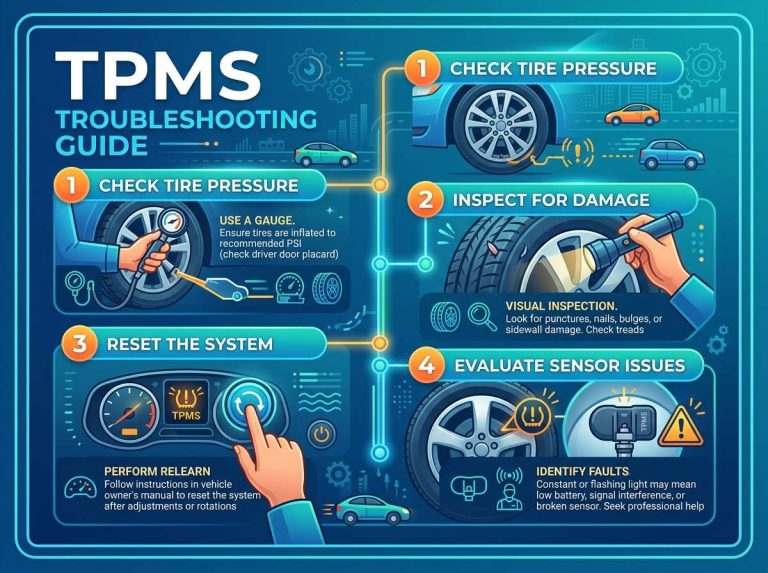
Even with a compatible sensor, proper installation and integration into your vehicle’s system are crucial. This often involves a “relearn” procedure. The vehicle’s TPMS module needs to “learn” the unique ID codes of the new sensors so it can recognize and monitor them.
Why Relearn is Necessary for Compatibility
- New Sensor IDs: Each TPMS sensor has a unique serial number or ID. When a sensor is replaced, the vehicle’s computer no longer recognizes the old ID and needs to be updated with the new one.
- System Initialization: The relearn process initializes the TPMS system, ensuring it correctly communicates with all four (or five, if you have a full-size spare with a sensor) sensors.
Types of TPMS Relearn Procedures
The specific relearn procedure varies significantly by vehicle make and model:
- Auto Relearn: The simplest method. After installing new sensors, you simply drive the vehicle for a certain period (e.g., 10-20 minutes) at a specific speed. The vehicle’s TPMS module automatically detects and learns the new sensor IDs.
- Manual Relearn: Requires a specific sequence of actions, often involving turning the ignition on/off, pressing certain buttons, or deflating/inflating tires in a particular order. This procedure is usually detailed in your vehicle’s owner’s manual.
- OBD-II Relearn (or Scan Tool Relearn): The most common method for many modern vehicles. It requires a specialized TPMS scan tool to communicate directly with the vehicle’s OBD-II port. The tool uploads the new sensor IDs to the vehicle’s TPMS module. This is often necessary for programmable aftermarket sensors.
- Stationary Relearn: Similar to manual, but often requires a TPMS activation tool to trigger each sensor during the process.
Mistake to Avoid: Assuming a new sensor will work without any relearn procedure. This is a common reason for the TPMS light remaining on after sensor replacement.
Mistakes to Avoid When Choosing TPMS Sensors
Navigating TPMS sensor compatibility can be tricky. Here are common pitfalls to steer clear of:
- Ignoring Frequency: As mentioned, mixing 315 MHz and 433 MHz sensors is a guaranteed failure. Always confirm your vehicle’s required frequency.
- Skipping Vehicle Specificity Checks: Don’t just buy a sensor that “looks similar” or is generically labeled for your car brand. Always verify compatibility with your exact make, model, and year using the sensor’s part number or a compatibility lookup tool.
- Forgetting the Relearn Procedure: A compatible sensor is useless if the car’s computer doesn’t know it’s there. Factor in the relearn process and necessary tools (or professional help).
- Mixing Sensor Types: While some systems might tolerate it, it’s generally best practice to replace all four sensors with the same type (e.g., all OEM, or all from the same aftermarket brand and model). Different brands or types might have subtle differences in response times or signal strength, potentially leading to inconsistent readings.
- Buying Cheap, Unbranded Sensors: While cost-effective, these often lack quality control, may not adhere to proper communication protocols, and can fail prematurely or never connect properly. Stick to reputable brands.
- Not Considering Valve Stem Type: Most direct TPMS sensors are attached to the valve stem. These stems can be rubber snap-in or aluminum clamp-in. Ensure your replacement sensor comes with the correct valve stem type for your wheels, or that the stem is replaceable.
Tips for Ensuring Correct TPMS Sensor Compatibility
To guarantee a smooth TPMS sensor replacement, follow these practical tips:
- Consult Your Vehicle Manual: Your owner’s manual is an invaluable resource. It often specifies the type of TPMS system, the required sensor frequency, and sometimes even the OEM part number. It will also detail the correct relearn procedure.
- Use Online Compatibility Tools: Reputable TPMS sensor manufacturers (e.g., Schrader, VDO, Continental, Autel) and major auto parts retailers provide online compatibility tools. You input your vehicle’s make, model, and year, and they will list compatible sensors. Always cross-reference with multiple sources if possible.
- Check the Old Sensor: If you’re replacing a faulty sensor, try to retrieve its part number. This can often be found stamped directly on the sensor body. This OEM part number is the most reliable way to find an exact match or a compatible aftermarket alternative.
- Shop Reputable Brands and Retailers: Purchase sensors from well-known manufacturers or trusted automotive parts suppliers. This reduces the risk of counterfeit or low-quality sensors.
- Consider Professional Installation: If you’re unsure about compatibility, programming, or the relearn process, a qualified automotive technician or tire shop is your best resource. They have the specialized tools and expertise to ensure correct sensor selection, programming, and relearn.
- Replace All Sensors at Once (Optional but Recommended): TPMS sensor batteries typically last 5-10 years. If one sensor fails due to battery depletion, the others are likely not far behind. Replacing all four at once can save you future labor costs and repeated trips to the shop.
When to Replace TPMS Sensors
Beyond compatibility, knowing when to replace your sensors is important:
- TPMS Warning Light Stays On: If your TPMS light remains illuminated even after checking and correcting tire pressure, and performing a relearn (if applicable), a sensor may be faulty.
- Sensor Battery Life: TPMS sensor batteries are sealed and non-replaceable. They typically last 5-10 years. If your vehicle is older than 5 years and you’re experiencing TPMS issues, battery depletion is a strong possibility.
- Physical Damage: Sensors can be damaged during tire mounting/dismounting, or by impacts. Visible damage warrants replacement.
- Corrosion: Over time, especially in harsh climates, sensors can corrode, particularly around the valve stem.
- Tire Replacement (Optional): Many people opt to replace TPMS sensors when getting new tires, especially if the sensors are already 5+ years old. This is a good preventative measure as the tires are already off the wheels, making sensor replacement labor-free.
Frequently Asked Questions
Q1: Can I use a TPMS sensor from a different car model if it’s the same brand and frequency?
A1: Not reliably. While the brand and frequency might match, the specific communication protocol used by the sensor to “talk” to the car’s computer is often model and year-specific. Always verify compatibility with your exact vehicle’s make, model, and year, even if the brand and frequency are the same.
Q2: Do I need a special tool to install TPMS sensors?
A2: For physical installation, standard tire changing equipment is needed. However, you will almost certainly need a specialized TPMS programming/scan tool to perform the relearn procedure, especially for aftermarket programmable sensors or vehicles requiring an OBD-II relearn. Some auto parts stores rent or offer this service.
Q3: What happens if I install an incompatible TPMS sensor?
A3: If a sensor is incompatible, your vehicle’s TPMS module will not be able to recognize or communicate with it. The TPMS warning light will remain on, often accompanied by a message like “TPMS Malfunction” or “Service TPMS.” You will not receive tire pressure readings from that sensor.
Q4: Are “universal” TPMS sensors truly universal?
A4: The term “universal” for TPMS sensors typically means they are programmable to be compatible with a wide range of vehicles, not that they work out-of-the-box with any car. They still require a specialized TPMS programming tool to load the correct vehicle-specific protocol and frequency.
Q5: Can I drive my car with the TPMS light on?
A5: While you can drive with the TPMS light on, it’s not recommended. The light indicates a potential safety issue with your tire pressure or the system itself. If the light is on, you won’t be alerted to genuinely low tire pressure, increasing your risk of an accident or premature tire wear. Address the issue promptly.
Q6: How long do TPMS sensor batteries last?
A6: TPMS sensor batteries are designed to last between 5 and 10 years, with 7 years being a common average. They are sealed units and cannot be replaced separately; the entire sensor must be replaced once the battery dies.
Final Verdict
TPMS sensor compatibility is not a “one-size-fits-all” scenario. It’s a critical aspect of maintaining your vehicle’s safety system, requiring careful attention to detail. The intricate dance between frequency bands, communication protocols, and vehicle-specific requirements means that choosing a replacement sensor demands precision.
While OEM sensors offer guaranteed compatibility, aftermarket programmable options provide a versatile and often more affordable solution, provided they are correctly programmed. Always prioritize verified compatibility based on your vehicle’s exact make, model, and year. Don’t overlook the essential relearn procedure, as even a perfectly compatible sensor won’t function without proper integration into your vehicle’s system. When in doubt, consulting your owner’s manual or a trusted automotive professional is the smartest path to ensuring your TPMS system operates flawlessly, keeping you safe on the road.

Peterson is an automotive safety enthusiast and product reviewer with a passion for helping drivers stay safe on the road. He researches and tests dash cams, backup cameras, TPMS systems, emergency tools, GPS trackers, and other vehicle safety products to provide honest, practical recommendations. Through CarSafeties.com, Peterson shares in-depth reviews, buying guides, and maintenance tips to help drivers make smarter and safer decisions.