How Car Alarm Systems Work?
Your car is one of your biggest investments. Every night when you park in your driveway or head into a store, you want to know your vehicle stays safe and secure. That’s where car alarms come in. They’re like having a watchdog that never sleeps, always ready to alert you if someone tries to mess with your car. But how exactly do these systems work? Let’s break it down into simple, easy-to-understand pieces.
In this article
What Is a Car Alarm System, Anyway?
A car alarm system is basically a security device that detects unauthorized access to your vehicle and makes noise to scare away potential thieves. When someone tries to break into your car or tamper with it, the alarm goes off—loud enough to get attention from people nearby and definitely loud enough to make any burglar think twice.
The best part is that these systems work automatically. You don’t have to do anything special. Once you set your car alarm, it watches over your vehicle 24/7. If something suspicious happens, the system springs into action without you needing to press any buttons.
The Basic Components of Your Car Alarm
Every car alarm system has several key parts that work together like a team. Let’s look at each one.
The Control Module
Think of the control module as the brain of your alarm system. This is a small computer box that sits hidden somewhere in your car, usually under the dashboard or behind a panel. It receives information from all the sensors and decides what to do—whether to trigger the alarm, send alerts, or stay quiet.
The control module is incredibly smart. It can tell the difference between a real threat and something harmless, like a strong wind or a passing truck vibrating your car. This prevents false alarms that annoy everyone in the neighborhood.
The Sensors
Sensors are the eyes and ears of your alarm system. They’re spread around your vehicle and detect different types of trouble.
Door and Window Sensors: These magnetic sensors sit on every door and window. When you open a door or window without disarming the alarm, these sensors detect the change and send a signal to the control module. Think of them like tiny trip wires that react instantly when someone tries to get inside your car.
Motion Sensors: These devices pick up movement inside your vehicle. Some alarms use passive infrared sensors that detect body heat. If someone is moving around inside your car, the motion sensor spots them and alerts the system.
Shock Sensors: Sometimes called vibration sensors, these detect sudden bumps or impacts on your car. If someone tries to smash a window or pry open a door with force, the shock sensor feels it and signals the alarm. These sensors are sensitive but not so sensitive that a heavy truck driving by sets them off.
Pressure Sensors: These sensors monitor the air pressure inside your car. If someone opens a door or breaks a window, the air pressure changes. The pressure sensor catches this change and alerts the control module.
The Siren or Horn
This is the part that makes all the noise. The siren is usually super loud—around 110 to 130 decibels. That’s as loud as a rock concert or a chainsaw. This noise serves two purposes: it startles any would-be thieves and alerts people nearby that something is wrong with your car.
Most modern alarms have multiple speakers throughout the vehicle, so the sound comes from everywhere. Some systems can even flash the lights along with the noise to make the alarm even more attention-grabbing.
The Transmitter and Receiver
Your key fob has a tiny transmitter inside it. When you press the lock or unlock button, it sends a signal to a receiver in your car. This wireless communication tells your car whether to arm or disarm the alarm. The range is typically quite good—sometimes up to 100 feet or more, depending on the system.
The Battery Backup
Most car alarms have a backup battery that keeps the system running even if someone disconnects your main car battery. This is crucial because thieves sometimes try to cut the power to disable the alarm. The backup battery makes sure the alarm can still go off and protect your vehicle.
How the Alarm Gets Triggered
Now let’s walk through what happens when your car alarm actually activates.
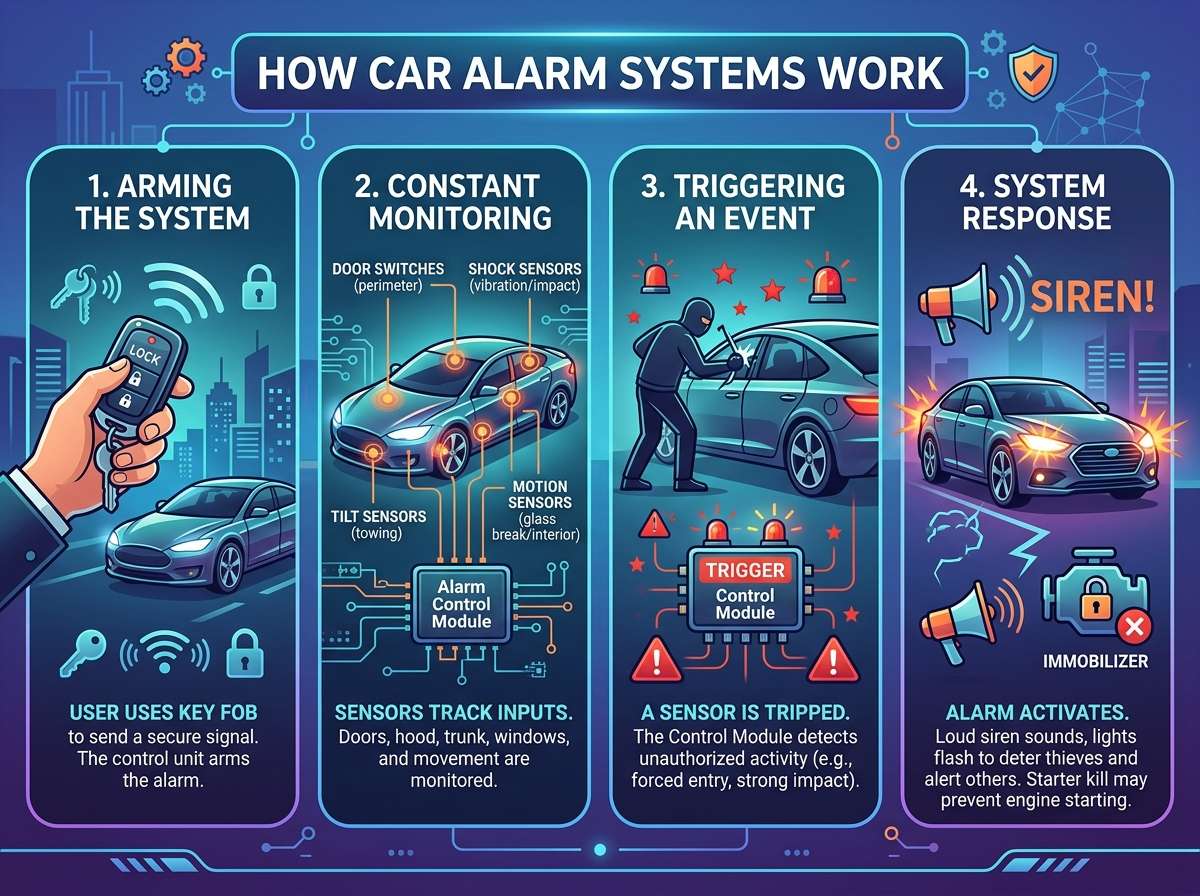
Step One: Arming the System
You park your car and press the lock button on your key fob. This wireless signal tells the car’s receiver to activate the alarm system. The control module receives this signal and puts the system into armed mode. At this point, all the sensors wake up and start paying attention.
Step Two: Waiting for Trouble
Once armed, your alarm sits quietly, monitoring everything. The sensors continuously check for problems. The door sensors watch for any opening. The motion detectors scan for movement. The shock sensors feel for impacts. Everything is peaceful and normal—the system just waits.
Step Three: Detecting an Intrusion
Let’s say a thief walks up to your car and tries to break in. They might attempt to open a door without the proper unlock signal. The moment that door moves, the door sensor detects it. Or if they smash a window, the shock sensor feels the vibration and the pressure sensor notices the air pressure change.
The sensor sends a signal to the control module saying, “Hey, someone’s trying to get in!” The control module instantly recognizes this as suspicious activity.
Step Four: Triggering the Alarm
The control module decides it’s time to make some noise. It sends a signal to the siren, and suddenly the alarm blares to life. The lights might flash too. It’s loud, it’s obvious, and any reasonable thief is going to run away from your car as fast as possible.
The alarm usually continues for a set amount of time—sometimes one to three minutes—before stopping automatically. This prevents the alarm from running forever and driving the whole neighborhood crazy. If the alarm keeps detecting trouble, it might trigger again.
Different Types of Car Alarm Systems
Not all car alarms work exactly the same way. There are several different types, and they offer different levels of protection.
Factory-Installed Alarms
Many new cars come with alarms built in from the manufacturer. These are the most basic option but they do the job. They typically have door sensors and a siren. Factory alarms are simple and reliable, though they might not have all the fancy features of aftermarket systems.
Aftermarket Alarms
People can buy and install alarms separately from the car manufacturer. Aftermarket alarms offer more features and customization. You can choose exactly what type of sensors you want, how sensitive they should be, and what features matter most to you. These systems tend to be more powerful than factory models.
GPS-Enabled Alarms
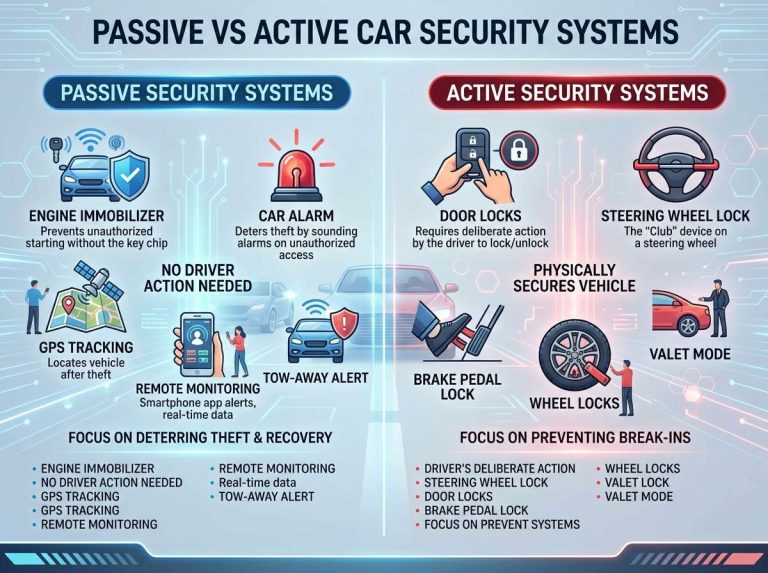
Some modern alarm systems include GPS tracking. If your car gets stolen, this system can tell you exactly where it is using satellite technology. You can track your vehicle in real-time on your smartphone. This is one of the best options if you live in an area with high theft rates.
Smart Alarms
Smart alarm systems connect to your phone via an app. You get instant notifications when your alarm goes off, even if you’re miles away. Some systems let you remotely disarm the alarm or control other features from your phone. These alarms represent the cutting edge of car security.
How Sensors Know What’s Real and What’s Not
One of the smartest things about modern car alarms is their ability to avoid false alarms. Getting woken up at 2 AM because the wind hit your car gets old really fast. So how do systems know the difference?
Sensitivity Levels
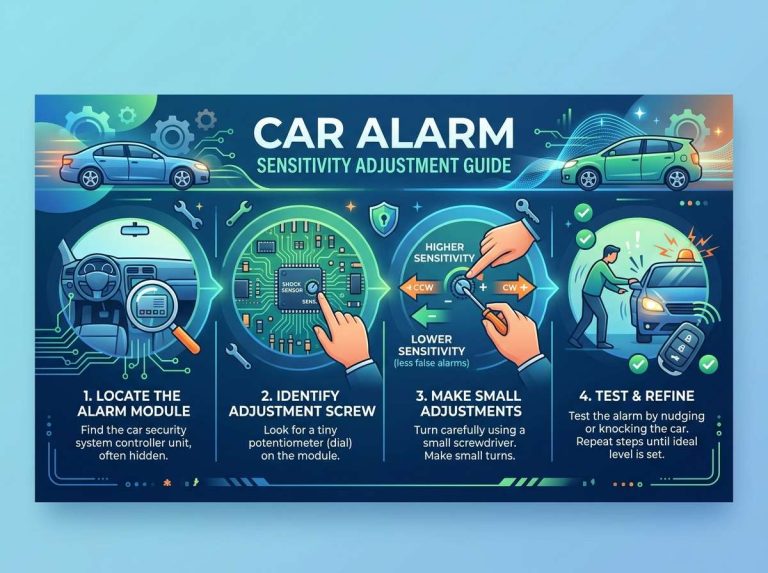
The control module lets you adjust how sensitive the sensors are. You can set them to react only to serious threats. A gentle bump from another car might not trigger it, but someone actively trying to break in definitely will. Most systems come pre-adjusted to a good middle ground that catches real problems without being too jumpy.
Dual-Stage Triggering
Some sensors use a two-step process. The first stage might just be an alert—the alarm system notes something suspicious but doesn’t start blaring yet. If the threat continues, the second stage activates and the siren goes off. This prevents one random vibration from sending your entire alarm into panic mode.
Ignition Recognition
Smart alarms know when you’ve turned on the car. Once the ignition is on, they disarm automatically. They don’t want to start screaming the moment you start your engine. The system recognizes that you’re the owner and have started the vehicle normally.
Can Your Car Alarm Get Hacked?
In our digital world, security is a common concern. Can thieves disable your alarm? The short answer is: it’s very difficult with modern systems.
Modern car alarms use encrypted signals for wireless communication. Think of encryption like a secret code. Even if someone intercepts the signal, they can’t decode it without the specific code. Each key fob and vehicle pair has a unique code, making it nearly impossible to clone or bypass.
The rolling code technology adds another layer of protection. Every time you press your key fob, it generates a new code. The previous code doesn’t work anymore. This prevents thieves from recording your signal and playing it back later.
Of course, no system is 100 percent perfect. Determined thieves with sophisticated equipment might be able to break through, but they’d need special skills and expensive tools. For most situations, your car alarm is plenty secure.
Maintenance and Care for Your Alarm
Your car alarm works best when it’s in good condition. Here are some things to keep in mind.
Regular Testing
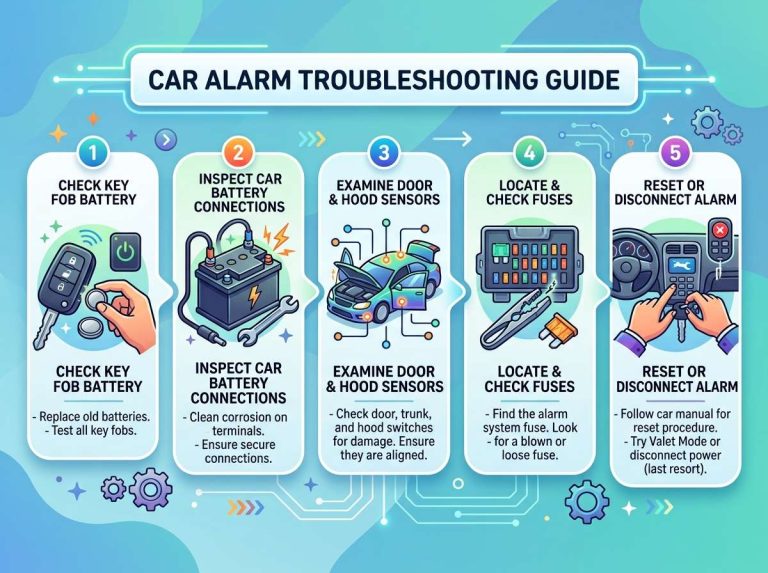
Test your alarm occasionally to make sure it still works. Find a safe place to arm it, then try opening a door to see if the alarm triggers. If it doesn’t go off, something might be wrong and you should have it checked.
Battery Replacement
The batteries in your key fob will eventually die. When they do, replace them promptly. Dead batteries mean you can’t disarm your alarm, which is a real hassle. Most key fob batteries cost just a few dollars.
Professional Inspection
If you have an aftermarket alarm or a sophisticated system, consider having a professional look it over every year or so. They can make sure all the sensors are working and that everything is connected properly.
Keeping the Remote Clean
Your key fob is a delicate piece of technology. Keep it clean and dry. Avoid dropping it or exposing it to extreme heat or cold. These things can damage the internal circuits and make it stop working.
Common Alarm Problems and What They Mean
Sometimes car alarms act weird or stop working entirely. Let’s go through some common issues.
False Alarms Going Off Constantly
If your alarm keeps going off when it shouldn’t, the sensors might be too sensitive. Try adjusting the sensitivity settings. If that doesn’t work, one of the sensors might be malfunctioning and needs replacement.
The Alarm Won’t Disarm
If you press the unlock button on your key fob and the alarm doesn’t turn off, the batteries in your fob might be dead. Try replacing them. If that doesn’t fix it, your receiver might be broken and need professional attention.
No Sound Coming From the Siren
A silent alarm is useless. If your siren isn’t working, it could be a blown fuse, a disconnected speaker, or a dead battery. This is something a car alarm professional should check out.
Key Fob Not Working From a Distance
If your key fob only works when you’re right next to your car, the antenna or receiver might be damaged. This could also mean there’s too much interference from nearby electronics. Try moving away from buildings and see if the range improves.
The Future of Car Alarms
Car security technology keeps getting better. In the future, we might see alarms that use facial recognition to identify thieves. Biometric systems that respond to fingerprints are already being tested. Some experts predict that artificial intelligence will let alarms learn what’s normal for your vehicle and detect anything out of the ordinary more accurately.
We’ll also likely see more integration with smartphones and smart homes. Your alarm might communicate with your home security system or send alerts to other family members automatically. The cars of tomorrow will be harder than ever to steal.
Should You Get an Aftermarket Alarm?
If your car didn’t come with an alarm, or if your factory alarm seems weak, you might want an aftermarket system. Here’s what to think about.
Cost: Aftermarket alarms range from a few hundred to a couple thousand dollars depending on the features. Installation costs extra if you don’t install it yourself.
Insurance Discounts: Some insurance companies give you discounts for having a high-quality alarm system. The discount might help pay for the system over time.
Peace of Mind: If you live in a high-crime area or your car is a popular theft target, a good alarm system is worth the money. Knowing your vehicle is well-protected is priceless.
Installation: You can install some systems yourself, but most people hire professionals. This ensures everything is hooked up correctly.
The Bottom Line on Car Alarms
Car alarm systems are an important part of keeping your vehicle safe. They work by detecting unauthorized access through sensors and responding with loud noises and flashing lights that scare away thieves. Modern systems are smart, reliable, and hard to bypass. They’ve come a long way from the simple alarms of decades past.
Your car alarm sits there quietly, doing its job every single day and night. Most of the time you don’t even think about it. But when trouble tries to approach your vehicle, it springs into action instantly. That’s the beauty of a good alarm system—it works silently in the background until it’s needed, then it makes its presence known in a big, loud way.
Whether you have a basic factory alarm or a high-tech GPS-enabled system, you can feel confident that your vehicle has a solid first line of defense against thieves. Combined with other security measures like steering wheel locks or parking in well-lit areas, a good alarm system makes your car a much harder target than the guy’s vehicle parked next to you.
Quick Tips to Maximize Your Alarm’s Effectiveness
Here are some practical tips to get the most out of your car alarm:
Park Smart: Leave your car in well-lit, populated areas. Thieves prefer dark, quiet places where an alarm can go off without attracting attention.
Arm It Every Time: Get in the habit of always engaging your alarm when you leave your vehicle, even for quick trips. You never know when a thief might be watching.
Keep Your Key Fob Secure: Don’t leave your key fob visible or easily accessible. Keep it on your person at all times when your car is parked.
Consider Extra Security: Use a steering wheel lock, club, or other visible deterrent along with your alarm. Thieves like easy targets and will usually move on to a car without multiple security measures.
Test Occasionally: Once a month or so, test your alarm in a safe place to make sure everything is working correctly.
Install a Camera: Dash cams and parking-mode cameras add another layer of protection. Many thieves will skip a car with a visible camera.
Understanding Your Alarm’s Manual
Every alarm system is slightly different. Your manual contains important information about your specific model. It tells you how to adjust sensitivity, set different modes, and troubleshoot problems. Read it carefully. You might find features you didn’t even know your alarm had.
Wrapping Up
Car alarms have been protecting vehicles for decades, and they continue to get smarter and more effective. The sensors, sirens, and smart control modules work together to create a security system that’s incredibly hard for thieves to overcome. Your alarm doesn’t require any effort from you once it’s installed and armed. It just sits there, watching your car, ready to defend it 24/7.
Understanding how these systems work helps you appreciate the technology that’s protecting one of your most valuable possessions. It also helps you use your alarm effectively and troubleshoot any problems that might come up. The next time you hear a car alarm go off, you’ll know exactly what’s happening inside that vehicle and why every part is so important.
Your car alarm might seem like a simple device, but it’s actually the result of years of engineering and improvements. It’s a reliable guardian that keeps thieves thinking twice before targeting your vehicle. That’s pretty impressive for a device you probably never think about until something goes wrong.
Keep your alarm in good working order, test it regularly, and use it every single time you park your car. Do that, and you’ll have one of the best defenses against vehicle theft that money can buy. Your car will be safer, you’ll have peace of mind, and thieves will look for an easier target somewhere else. That’s the real power of a good car alarm system.

Peterson is an automotive safety enthusiast and product reviewer with a passion for helping drivers stay safe on the road. He researches and tests dash cams, backup cameras, TPMS systems, emergency tools, GPS trackers, and other vehicle safety products to provide honest, practical recommendations. Through CarSafeties.com, Peterson shares in-depth reviews, buying guides, and maintenance tips to help drivers make smarter and safer decisions.