Car Alarm Troubleshooting Guide
Is your car alarm going off at random times? Does it refuse to work when you actually need it? You’re not alone. Car alarm problems frustrate thousands of drivers every single day, and the good news is that most of these issues are fixable without a trip to the mechanic.
In this article
This guide walks you through everything you need to know about car alarm repair and car alarm problems. We’ll cover the most common reasons your vehicle alarm keeps going off, how to diagnose the issue yourself, and when it’s time to call a professional.
What Is a Car Alarm System and Why Does It Matter?
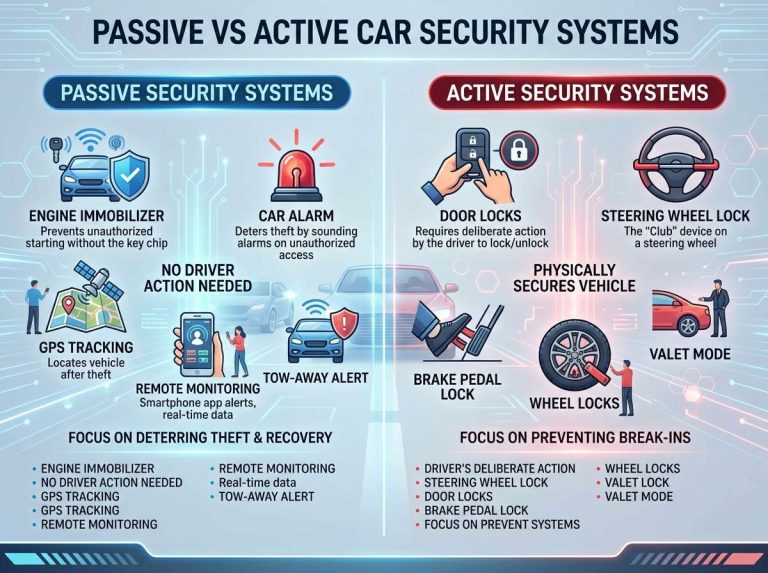
A car alarm is your vehicle’s first line of defense against theft. It detects unauthorized access, movement, and tampering, then alerts you and nearby people with sound and light signals. When working properly, a car alarm can prevent break-ins and deter thieves from targeting your vehicle.
Think of your alarm system as a security guard for your car. It sits there quietly, monitoring for trouble, and springs into action the moment something seems wrong. Most modern alarms use sensors, control modules, and sound generators to create that ear-splitting noise when they detect a threat.
But here’s the thing: alarms sometimes malfunction. They might trigger when a strong wind blows past your car, or they might stay silent when someone actually tries to break in. When this happens, you need a way to fix it fast.
Common Reasons Your Car Alarm Keeps Going Off
Battery Issues Are Often the Culprit
A dying or dead battery can cause serious alarm problems. Your car’s battery powers the entire alarm system, including the sensors and the sound unit. When the battery voltage drops too low, weird things happen.
Low battery voltage can trigger false alarms because sensors become overly sensitive. They might mistake a gentle bump for a break-in attempt. A weak battery can also fail to power the alarm properly, causing it to go off randomly instead of responding to actual threats.
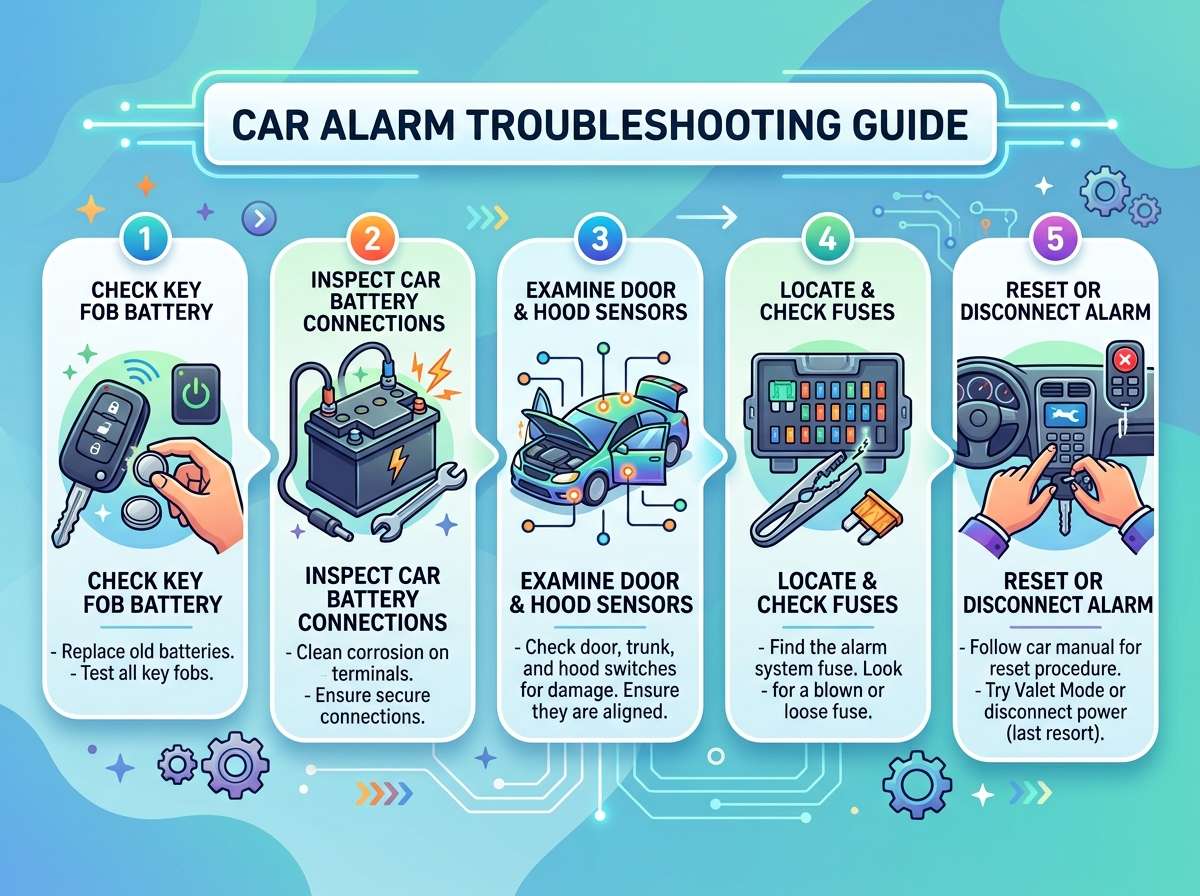
Check your battery first. Open your hood and look at the battery terminals. Are they corroded? Do they look loose? Corrosion looks like white, blue, or green crusty buildup on the metal posts. Loose connections mean your battery isn’t delivering steady power to the alarm system.
If your battery is older than three or four years, it’s probably time for a replacement. Car batteries lose their ability to hold a charge over time, especially in hot climates or if you take frequent short trips.
Door Sensors Acting Up
Your car has door sensors that detect when someone opens a door, trunk, or hood without using the key. These sensors tell your alarm system that someone’s trying to get inside.
Door sensors can fail for several reasons. Moisture gets inside the sensor housing and causes corrosion. The sensor gets bumped out of alignment. The wiring breaks from constant opening and closing of the door.
To check if a door sensor is the problem, open and close each door one at a time while watching if the alarm triggers. If the alarm goes off when you open a specific door, you’ve found your culprit. The sensor on that door needs cleaning or replacement.
Look inside the door frame where the sensor sits. You’ll see a small plastic piece that sticks out when the door is shut. This strikes a switch on the car body, completing a circuit. If this switch is dirty or bent, it won’t work right.
Impact Sensors Gone Wrong
Impact sensors, also called shock sensors, detect vibrations and bumps on your car. They’re designed to trigger the alarm if someone tries to smash your window or break into your trunk.
The problem is that impact sensors are sometimes too sensitive. A strong gust of wind can shake your car enough to trigger the alarm. A truck driving past your parked car can vibrate your vehicle and set off the noise.
Impact sensors can also fail when they get loose inside their mounting bracket. This loose movement makes them go off at the slightest vibration. A failing impact sensor might trigger the alarm constantly, or it might not work at all when you need it.
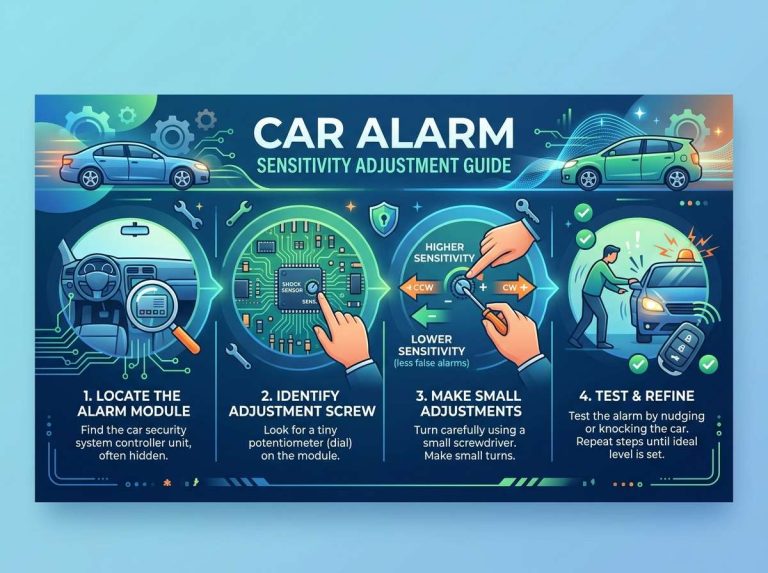
You can usually adjust the sensitivity of your impact sensor. Look in your owner’s manual for where the sensor sits and how to access it. Many sensors have a small dial that lets you turn the sensitivity up or down.
Wiring Problems and Loose Connections
Wires that run from your alarm sensors to the control module can wear out, break, or come loose. Rodents sometimes chew through wires, especially in older vehicles or cars that sit unused for long periods.
Loose connections happen naturally over time as your car vibrates, heats up, and cools down. Metal expands and contracts with temperature changes. A connection that was tight when installed becomes loose after thousands of heating and cooling cycles.
To check for wiring issues, you’ll need to access the area behind the dashboard. This is more involved than checking your battery or door sensors. If you’re not comfortable doing this yourself, a mechanic can do it quickly.
Look for wires that show cracks in their insulation, are pinched, or are disconnected. Pay special attention to areas under the steering wheel and near the firewall.
Alarm Control Module Issues
The control module is your alarm system’s brain. It receives signals from all the sensors and decides whether to trigger the alarm. When the control module fails, your entire alarm stops working right.
A failing control module might cause constant false alarms, random triggering, or complete system failure. Water damage is a common cause. The control module usually sits under the dashboard or behind a door panel, where it can get wet from rain seeping into your car.
Electrical shorts can also damage the control module. This happens when wires cross and their bare metal touches, creating an uncontrolled electrical path.
Testing the control module requires specialized equipment that most DIYers don’t have. If you suspect control module failure, have a mechanic run a diagnostic test.
Your Battery Terminals Need Cleaning
Even if your battery has plenty of juice, corroded terminals stop power from flowing properly. Corrosion acts like a blockage in a water pipe. Power can’t get through, so the alarm system doesn’t get the electricity it needs.
Cleaning battery terminals is one of the easiest fixes you can do. Here’s how:
First, disconnect the negative terminal, which is usually marked with a minus sign and a black wire. Next, mix baking soda with water to make a paste. Use an old toothbrush to scrub the terminals and the cable clamps until the corrosion comes off. Rinse with clean water and let everything dry completely. Finally, reconnect the negative terminal.
This simple fix solves many alarm problems caused by poor electrical connections.
Horn and Sound System Failures
Sometimes the problem isn’t the alarm sensors or control module. The issue is that the horn or sound amplifier stops working. Your sensors might be working perfectly, but nobody hears the alarm go off.
Test your car horn by pressing the center of your steering wheel. Does it honk? If not, your horn needs attention. The horn might have blown a fuse, the wiring might be broken, or the horn itself might have burned out.
Check your fuse box first. Look in your owner’s manual to find which fuse controls your horn and alarm system. A blown fuse looks like a broken filament inside. You’ll see a dark line or gap in the middle of the fuse.
Replace blown fuses with new ones of the same amperage. Never use a fuse with a higher amperage than the original. That’s dangerous and can damage your car’s electrical system.
Step-by-Step Troubleshooting Process
Step One: Check Your Battery Voltage
Get a voltmeter from any auto parts store. This handheld tool measures electrical voltage in your car’s system. Turn off the engine and connect the voltmeter to your battery terminals, red to positive and black to negative.
A healthy car battery shows between 12.6 and 12.9 volts when the engine is off. Anything lower than 12.4 volts means your battery needs charging or replacement.
If your battery is low, charge it with a battery charger overnight or drive around for 30 minutes at highway speeds. Driving charges your battery through the alternator.
Step Two: Test Each Sensor Independently
Start with your door sensors. Open each door one at a time and listen for the alarm to arm or disarm. Your car should give some indication when you open a door while the alarm is armed.
Does the trunk sensor work? Pop your trunk and listen for the alarm. Does the hood sensor work? Open your hood.
If your alarm responds correctly to each door and the trunk, your sensors are probably fine. If one door doesn’t trigger the alarm, that’s your problem door.
Step Three: Check All Wiring Connections
Pop your hood and look at the battery terminals again. Are they tight? Try turning the cable clamp with a wrench. You shouldn’t be able to turn it very far if it’s tight enough.
Look at wires running through your engine bay. Do any look damaged? Do you see any wires that aren’t connected?
If you’re comfortable removing door panels, check the wiring there too. Gently pull the panel away from the door. Look for loose connections, damaged insulation, or corrosion.
Step Four: Reset Your Alarm System
Sometimes your alarm just needs a reset to fix temporary glitches. Disconnect the negative battery terminal for 15 minutes. This clears any errors stored in the control module.
Reconnect the battery and lock your car. Leave it locked for five minutes without touching anything. This allows the system to fully restart.
Try opening a door or trunk to see if the alarm responds normally now.
Step Five: Review Your Owner’s Manual
Your car’s manual contains specific information about your particular alarm system. It shows the fuse locations, tells you how to arm and disarm the alarm, and explains what different beeps or lights mean.
Find the manual in your glove box or download it online from your car manufacturer’s website. Look for the alarm system section and follow the reset instructions specific to your vehicle.
DIY Alarm Fixes You Can Actually Do
Cleaning Battery Corrosion
You already learned this one, but it’s worth repeating because it’s so effective. Corroded battery terminals cause more alarm problems than almost anything else.
Mix baking soda and water. Scrub with an old brush. Rinse and dry. Reconnect. Done. This takes 15 minutes and costs almost nothing.
Replacing Blown Fuses
Open your fuse box and identify which fuse controls the alarm. Replace it with a new one of the same amperage. Most fuses cost less than a dollar each.
Keep a few spare fuses in your glove box. That way you always have replacements on hand.
Adjusting Impact Sensor Sensitivity
Many impact sensors have an adjustment screw or dial. Turning it makes the sensor less sensitive to vibrations. Check your manual for the exact location of your sensor and adjustment method.
Start by turning the sensitivity down slightly. Test your alarm by tapping gently on your car. If it doesn’t trigger, you’ve found the right level. Turn it down a bit more to be safe.
Securing Loose Door Sensors
If a door sensor is loose, it might come completely out of alignment. You can often push it back into place and secure it with a small clip or bracket.
Make sure the sensor strikes the switch properly when the door closes. The switch should make a clear clicking sound when activated.
Disconnecting and Reconnecting Your Battery
This reset works surprisingly often. Disconnect the negative terminal for at least 15 minutes. Reconnect it and wait five minutes before testing your alarm.
This clears temporary errors and lets the control module reboot, similar to restarting a computer.
When to Call a Professional Mechanic
Some alarm problems need professional attention. Know when to throw in the towel and call a pro.
You should visit a mechanic if your alarm keeps triggering false alarms after you’ve tried all the DIY fixes above. A false alarm that won’t go away means something deeper is wrong.
Call a mechanic if your alarm doesn’t work at all, even after you’ve checked the battery, fuses, and connections. Complete system failure usually means control module problems or extensive wiring issues.
If your car has been in an accident, even a minor one, get the alarm system checked. Impact damage can break sensors you can’t see, and control modules can shift out of alignment.
Water damage is another reason to call a pro. If your car has been flooded or exposed to heavy water intrusion, the electrical system needs professional diagnosis. Water damage affects multiple components and can be dangerous to repair yourself.
Strange smells coming from your dashboard suggest electrical problems. Burning smells especially mean it’s time to call a professional immediately.
How to Prevent Alarm Problems in the Future
Regular Maintenance Prevents Headaches
Have your battery tested every couple of years, especially if it’s more than three years old. Most auto parts stores test batteries for free.
Clean your battery terminals twice a year. Even if there’s no visible corrosion, it’s good preventative maintenance.
Inspect door seals regularly. Damaged door seals let water into the door panels where your sensors live. Water damages sensors and causes corrosion.
Keep Moisture Out of Your Car
Water is the enemy of car alarm systems. Check your door seals and weather stripping. Replace them if they’re cracked or damaged.
After washing your car, make sure water doesn’t get inside door panels. Some car washes blast water into areas that shouldn’t get wet.
If your car gets wet from rain or flooding, dry it out as soon as possible. Open windows and use fans to circulate air.
Drive Your Car Regularly
Cars that sit unused for weeks develop problems faster. Regular driving keeps your battery charged, exercises all the mechanical components, and helps everything work as designed.
If you need to leave your car parked for an extended period, disconnect the negative battery terminal. This prevents a slow battery drain.
Have Your System Checked After Repairs
If you’ve had work done on your car, especially anything involving the dashboard or electrical system, make sure the alarm still works right. Sometimes mechanics accidentally disconnect alarm wiring while working on other parts of the car.
Test your alarm the day you pick your car up from the shop. That way you catch any problems before they become your problem.
Understanding Your Alarm’s Different Sounds and States
Your car alarm probably makes different sounds or states to tell you what’s happening. Learning what these mean helps you understand what’s wrong.
Most alarms have an armed state and a disarmed state. Armed means the alarm is watching for trouble. Disarmed means the alarm is off.
Some cars beep once when you lock them, confirming the alarm is armed. Others flash the lights. Learn what your car does when you lock it. If it doesn’t do anything, something’s wrong.
A steady alarm sound usually means someone is actually opening a door or trunk. The alarm is working correctly.
Intermittent alarm sounds, where the noise starts and stops randomly, usually mean a sensor is failing or a connection is loose.
A completely silent alarm might mean the sound system failed, or the entire alarm failed to activate.
Frequently Asked Questions About Car Alarms
Why does my car alarm go off in cold weather?
Cold weather makes everything contract slightly, including metal and plastic. A sensor that barely touches its switch might lose contact in extreme cold, triggering the alarm. This usually fixes itself as the temperature warms up, but you might want to have a mechanic check the sensor alignment.
Can I disconnect my car alarm?
Disconnecting your alarm is possible but not recommended. Your alarm protects your car from theft. Without it, thieves have an easier time stealing your vehicle.
If your alarm is broken, fix it or have it fixed instead of disconnecting it.
What if my car alarm goes off while I’m driving?
If your alarm triggers while you’re driving, turn the key off and on again to reset the system. If it triggers again, check your door and trunk to make sure they’re fully closed.
A loose door or trunk can trigger the alarm while driving. If everything’s closed tight and the alarm still triggers, you have a sensor or wiring problem that needs attention soon.
Is it expensive to fix a car alarm?
Battery terminal cleaning costs nothing. Replacing a fuse costs less than five dollars. New sensors run between 50 and 200 dollars depending on your car model.
Control module replacement is the most expensive fix, running 300 to 800 dollars plus labor. Most alarm problems cost far less than that.
Can I install an aftermarket alarm myself?
Yes, you can install an aftermarket alarm if you’re comfortable with basic electrical work and have the right tools. Many people successfully install aftermarket alarms themselves.
However, professional installation ensures proper setup and usually comes with a warranty. If you’re not confident, let a pro do it.
The Bottom Line on Car Alarm Fixes
Your car alarm system keeps your vehicle safe from thieves. When it goes wrong, fixing it should be a priority.
Start with the easy fixes: check your battery, clean the terminals, test the fuses, and reset the system. These simple steps solve most alarm problems.
If those don’t work, have a mechanic run a diagnostic test. A professional can identify problems you can’t see, like control module failure or broken wiring.
Regular maintenance prevents most alarm problems. Keep your battery healthy, maintain your door seals, and drive your car regularly.
With this guide, you now understand what causes alarm problems, how to diagnose issues yourself, and when to call for help. Your car alarm will be back in working order in no time, keeping your vehicle protected around the clock.
Remember, the cheapest car alarm repair is preventative maintenance. Spend a little time and money now to keep your system working right, and you’ll avoid expensive repairs and the stress of dealing with a broken alarm down the road.
Take action today. Check your battery, clean those terminals if they’re corroded, and test your alarm system. Your car will thank you, and you’ll sleep better knowing your vehicle is properly protected.

Peterson is an automotive safety enthusiast and product reviewer with a passion for helping drivers stay safe on the road. He researches and tests dash cams, backup cameras, TPMS systems, emergency tools, GPS trackers, and other vehicle safety products to provide honest, practical recommendations. Through CarSafeties.com, Peterson shares in-depth reviews, buying guides, and maintenance tips to help drivers make smarter and safer decisions.