How to Use a Car Escape Tool?
Your car is supposed to be a safe place. But what happens when an emergency traps you inside and you can’t get out the normal way? A car escape tool, also called an emergency car escape device or window breaker, could save your life in a critical situation. This guide walks you through everything you need to know about using one.
In this article
What Exactly Is a Car Escape Tool?
A car escape tool is a small device that helps you get out of your vehicle in an emergency. Most people think of car doors and windows as easy to open, but during a serious accident, power windows might stop working. Doors can jam from the impact. Seatbelts sometimes lock up. When these normal exits fail, you need backup help.
These tools solve that problem. A typical car escape tool is about the size of a flashlight and does two main jobs. First, it has a hard pointed tip that breaks car windows quickly. Second, it includes a sharp blade that cuts through seatbelts. Some models combine both features. Others focus on just one.
The best car emergency escape tools stay small enough to fit in your glove box, cup holder, or door pocket. You want one close by at all times since emergencies happen without warning. They cost between ten and thirty dollars, making them affordable safety gear that every driver should own.
Why You Need a Car Escape Tool
Car accidents happen in seconds. If your vehicle gets stuck in water, catches fire, or flips over, every second counts. An electric window won’t work if your car’s battery gets damaged. Door locks fail when circuits break. A seatbelt cutter becomes your fastest way out.
Escape tools save lives in several dangerous situations. During car accidents, collisions can jam your doors so badly that you can’t push them open no matter how hard you try. A window breaker lets you escape through the window instead.
Water emergencies put special pressure on trapped drivers. A car sinking in water or stuck in flooding fills with water fast. The water pressure outside makes doors nearly impossible to open. Your window breaker tool breaks the glass so you can climb out or swim to safety.
Car fires require immediate action. Flames spread quickly, and smoke fills the cabin in seconds. A tool that frees you from your seatbelt and breaks windows gets you out before flames reach you. Every second you save matters when fire is involved.
Traffic accidents on bridges or overpasses sometimes push cars over edges. If your vehicle goes through a guardrail into water below, you need to escape before the car sinks. An emergency window breaker becomes essential equipment.
Even rollover accidents benefit from having an escape tool available. When a car flips, the structure twists and doors lock from impact. Windows might not work. A reliable escape device gets you out safely.
Types of Car Escape Tools Available
Different escape tools work in different ways. Knowing the types helps you pick the right one for your needs.
Window Breaker Tools
The most common type focuses on breaking car windows. These use a hardened steel or ceramic tip to shatter the glass. Ceramic is particularly effective because it concentrates force on a tiny area. When you strike the window corner, it breaks cleanly and quickly.
Some window breakers work by pressing the tool against the window and pulling a trigger. Others require you to strike or hammer the window. The trigger models feel safer for people who worry about using a hammer motion while trapped in a stressful situation.
Seatbelt Cutters
A seatbelt cutter is a small blade tool that slices through seatbelts instantly. These cutters feature a sharp hook or blade that sits just inside the tool head. You position the cutter against your seatbelt and press or squeeze to cut it in one motion.
Seatbelt cutters are perfect for situations where you’re injured and can’t unbuckle normally. In an accident, a stuck belt might trap you in your seat while you need to move. A cutter solves that problem fast.
Combination Tools
The smartest choice for most drivers is a combination tool. These devices include both a window breaker and a seatbelt cutter in one compact package. You get maximum protection without carrying multiple items.
Combination escape tools often add extra features too. Some have flashlights to help you see better during dark emergencies. Others include emergency whistles to call for help. A few models have magnetic backs so they stick to your dashboard for quick grabbing.
Spring-Loaded Window Breakers
These tools store energy in an internal spring. You press the tool against your window, and the spring releases force that breaks the glass without you needing to strike it. This hands-free approach works well for drivers who might panic or freeze during emergencies.
Spring-loaded tools feel very safe to use. You just position them and press a button. The tool does the heavy work. This makes them perfect for elderly drivers or anyone with weak grip strength.
How to Choose the Right Escape Tool
Picking an escape tool depends on several factors. Think about where you’ll keep it, how much you’ll use it, and what emergencies concern you most.
Start by deciding between a dedicated window breaker, a seatbelt cutter, or a combination model. Most people benefit from combination tools because they cover multiple emergencies. You save money and space by buying one tool instead of two.
Look at the materials used. The best tools have hardened steel or ceramic tips for the window breaker and sharp stainless steel blades for the seatbelt cutter. Cheap plastic handles break easily. Quality tools use rubber or metal grips that won’t slip when your hands are wet or shaking.
Consider the size and weight. Your escape tool should be light enough to carry easily but heavy enough to feel solid and reliable. A tool about three to five inches long works best for most drivers. Too small and it’s hard to grip during stress. Too large and you’ll leave it at home because it’s inconvenient.
Check how the window breaker works. Strike-type tools need you to hit the window with force. If that sounds stressful, choose a press-and-release model instead. Both work well, but your comfort level matters. You want a tool you’ll actually carry and use if needed.
Read reviews from people who’ve tested the tools in real situations. Stories from people who’ve actually escaped from vehicles tell you what really works. Pay special attention to reviews mentioning how easy the tool is to use under stress.
How to Use a Car Escape Tool: Step-by-Step
Let’s walk through using an escape tool in an actual emergency. Knowing the steps ahead of time helps you act fast when stress kicks in.
Step One: Stay Calm
Your first job is controlling panic. Take quick breaths. Tell yourself the tool will work. You have options for escape. Staying calm helps you think clearly and move effectively.
Step Two: Check Your Surroundings
Before you start breaking windows or cutting seatbelts, think about your situation. Is the car on fire right now? Is water pouring in? Is it safe to stay in the car for another ten seconds while you grab your escape tool?
If it’s safe enough to grab your tool, get it. If you’re immediately in danger, start escaping with whatever methods work. A jammed door? Try the window. Can’t fit through the window? Use your seatbelt cutter if you’re trapped by the belt.
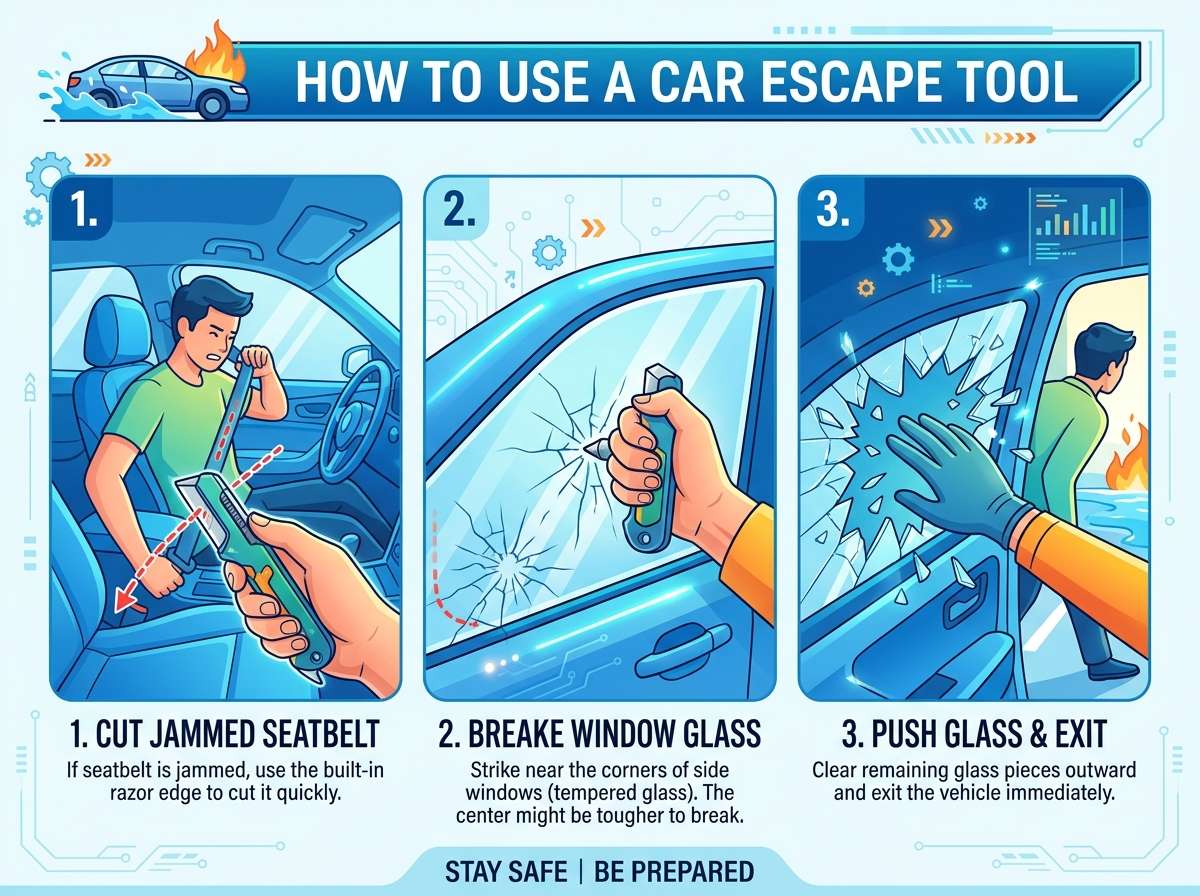
Step Three: Use the Seatbelt Cutter First If You’re Buckled In
If your seatbelt won’t release normally, use the cutter before breaking windows. An unbuckled you moves more freely. You can angle toward a window better. You can climb out without the belt tugging you back.
Position the seatbelt cutter against the belt with the blade facing the strap. Push or squeeze the cutter depending on your tool’s design. The belt should cut with one clean motion. Some belts have multiple layers, but the sharp blade cuts through them fast.
Step Four: Break the Window If Doors Won’t Open
Now focus on the window if you can’t open your doors. Don’t break the windshield. It’s tempting because it’s the biggest glass surface, but windshields have a special structure that makes them harder to break. Side windows and rear windows break much faster.
For a strike-type breaker, hold the tool firmly in your dominant hand. Aim at a corner of the side window, particularly the bottom corner. Windows are stronger in the middle. Corners and edges break more easily. Strike with firm force, not wild swinging. One or two solid strikes should break the glass.
For a press-type breaker, position the hard tip against the window corner and push down or press the trigger button. The tool transfers force and breaks the glass. This method needs less physical effort and works just as fast.
Step Five: Clear the Window Opening
Once the glass breaks, knock out any jagged edges sticking up from the window frame. You don’t want to cut yourself climbing through. Use your hands carefully or the back of your escape tool to brush away loose glass.
Step Six: Exit Through the Window
Now climb out. Lead with your head and shoulders. Go feet-first or head-first depending on what feels safer. If fire or water is involved, move as fast as you can while staying safe. Don’t stop to grab belongings. Your life matters more than any item in the car.
Once you’re out, move away from the vehicle. Get at least thirty feet away if possible. Stop for help if you’re injured. Call emergency services if they haven’t already been called.
Maintenance and Storage Tips
Your escape tool only works when you need it if you maintain it properly.
Keep It Accessible
Store your tool somewhere you can reach in seconds. Good places include your glove box, door pocket, under the seat, or attached to your sun visor. Don’t store it in the trunk where you can’t reach it while sitting in the driver’s seat.
Check It Regularly
Every few months, pull out your tool and examine it. Make sure the blade isn’t dull or damaged. Check that the window breaker tip isn’t chipped or cracked. Test any moving parts to confirm they work smoothly.
Keep It Clean
Wipe your tool with a dry cloth occasionally. Dust builds up over time and might interfere with function. If you drop it or it gets wet, dry it completely before storing it away.
Test It Safely
Never test your window breaker on your actual car windows. Instead, use old glass or tempered glass sheets from a hardware store if you want to see how your tool works. This gives you confidence without damaging your vehicle.
Replace When Needed
If your tool gets damaged or the blade becomes dull, replace it. A dull blade won’t cut seatbelts effectively. A chipped breaker tip won’t shatter windows cleanly. Tools are cheap enough that replacing a damaged one costs less than a single dinner out.
Common Mistakes People Make
Knowing what not to do helps you use your escape tool correctly.
Mistake One: Keeping It Out of Reach
The biggest mistake is storing your tool in the trunk or a locked case in the back seat. You need to grab it in seconds during an emergency. Keep it where your hands can find it immediately.
Mistake Two: Forgetting You Have It
If you buy an escape tool and never think about it again, you’ll panic during an emergency instead of remembering it’s there. Keep your tool visible or in a regular spot you notice. Some people write “Escape Tool” on their glove box. Others use a bright colored case so they remember it exists.
Mistake Three: Breaking the Windshield
Many people try to break the windshield first because it’s the biggest glass surface. Windshields are made from laminated layers that resist breaking. Side windows are made from tempered glass that breaks much faster. Always choose a side window over the windshield.
Mistake Four: Hesitating During Real Emergencies
When a real emergency happens, your brain moves slowly. Stress freezes people. You might hesitate to use your tool because you worry about getting cuts from broken glass. Push through that worry. Cuts heal. Not escaping from a burning car doesn’t.
Mistake Five: Buying the Cheapest Model Without Reading Reviews
The dollar-store escape tools that cost three dollars might not work when you need them. They use cheap materials that break easily. Spend a few more dollars on a well-reviewed tool that actually functions. This isn’t the place to save money.
Mistake Six: Not Teaching Others About Your Tool
Your passengers should know where your escape tool is stored. If you’re unconscious or injured, a passenger might need to use it. Tell your family members where to find it and how to use it.
Special Situations and Scenarios
Different emergencies might need slightly different approaches.
Car in Water
When a car goes into water, pressure builds against the doors making them nearly impossible to open. Your window breaker becomes critical. Break a window as quickly as possible and climb out before the water gets too high. Keep your escape tool in the front seat where you can grab it immediately, not in a back pocket you won’t reach.
Car on Fire
Smoke fills a burning car fast. You have minutes or less before the heat makes breathing impossible. Don’t waste time looking for items. Break a window immediately and get out. If you’re hurt and can’t use the window, use your seatbelt cutter first to free yourself.
Car in an Accident
After a collision, check what’s working. Can you open your door? Try it first before breaking a window. Does your seatbelt unbuckle? Push the button before using the cutter. Use your tool only if normal systems fail.
Vehicle Flipped Over
A rolled car is disorienting. You might be hanging from your seatbelt at an odd angle. Use your seatbelt cutter first to get free, then figure out which window is most accessible. Breaking upward is harder, so aim for a side window if possible.
Electrified Car in Water
If your car is in water and the electrical system is damaged, power windows won’t work. Your manual escape tool becomes your only way out since electrical systems have failed. This is another reason to always have a non-electric backup tool.
What To Do After Using Your Escape Tool
Once you’ve successfully escaped from your vehicle, several steps follow.
Seek Medical Attention
Even if you feel okay, get checked by medical professionals. Internal injuries don’t always show up immediately. Shock can mask pain. Let doctors examine you completely.
Report the Incident
Call police for an accident. Call fire services if your car caught fire or went into water. Reporting creates an official record that might matter for insurance claims or legal purposes.
Retrieve Your Escape Tool
If your tool ended up in or around your damaged vehicle, retrieve it once it’s safe to do so. You’ll want to replace it with a new one for your repaired or replacement car.
Talk About What Happened
Share your experience with family and friends if you’re comfortable doing so. Your story might convince someone else to buy an escape tool. You could help them survive an emergency before it happens.
Replace Your Tool
Even if you didn’t use your tool, once you’ve experienced a major emergency, your stress levels will be different next time. Buy a new escape tool to have ready in your next vehicle.
Should Every Driver Have an Escape Tool?
The answer is yes. Car escape tools are cheap, small, and could save your life. They don’t take up much space. They don’t require maintenance beyond occasional checking. They never hurt you. They only help when you need them.
Think of an escape tool like a fire extinguisher for your home. You hope you never need it. But having one available gives you options if a fire starts. The same logic applies to car escape tools. Most drivers never need them. But the ones who do need them desperately.
Parents with children should definitely have escape tools. Kids can’t always unbuckle themselves or break windows. An adult with an escape tool can free trapped children fast.
Older drivers benefit from having multiple tools in different locations. One in the glove box, one in the driver’s side door pocket, and one attached to the sun visor gives you options regardless of your position or what’s working.
Drivers who frequently travel through remote areas should consider escape tools mandatory. If you break down in the desert or mountains, a disabled power window system means you’re stuck without an alternative way out.
People who drive through areas with water like bridges, coastal roads, or flood-prone regions need these tools. Water emergencies happen suddenly and move fast.
Final Thoughts
A car escape tool is simple, affordable, and potentially life-saving. You take your time picking the right car, maintaining it properly, and insuring it thoroughly. Your escape tool deserves the same basic attention. Spend a little time now picking a good one. Find a spot to keep it where you can reach it instantly. Tell your family members where it is. Then don’t think about it again until you’re grateful it’s there.
Emergencies happen without warning. When your normal ways of leaving your car fail you, an escape tool provides the backup plan that keeps you alive. Don’t wait until you need one to buy it. Get one today and take that one small step toward being truly prepared for whatever the road throws your way.
Your life is worth thirty dollars and a few minutes of setup time. Make the choice to be ready.

Peterson is an automotive safety enthusiast and product reviewer with a passion for helping drivers stay safe on the road. He researches and tests dash cams, backup cameras, TPMS systems, emergency tools, GPS trackers, and other vehicle safety products to provide honest, practical recommendations. Through CarSafeties.com, Peterson shares in-depth reviews, buying guides, and maintenance tips to help drivers make smarter and safer decisions.