What Is a TPMS System?
If you’ve ever noticed a little tire-shaped light pop up on your dashboard, you’ve seen your TPMS system at work. But what exactly is it, and why does it matter so much for your car? Let’s dive into everything you need to know about tire pressure monitoring systems and why they’re becoming a standard safety feature on cars everywhere.
In this article
What Does TPMS Stand For?
TPMS stands for Tire Pressure Monitoring System. It’s a smart technology built into your vehicle that keeps tabs on the air pressure in all four (or five, if you have a spare) of your tires. The system sends you alerts when your tire pressure gets too low or too high, giving you a heads-up before a real problem develops.
Think of it as a personal health monitor for your tires. Just like a fitness tracker watches your heart rate, a TPMS watches your tire pressure and lets you know when something’s off.
How Does a TPMS System Work?
Your TPMS system works through a network of sensors and a receiver in your vehicle. Let me break down the basic components for you.
The Tire Pressure Sensors
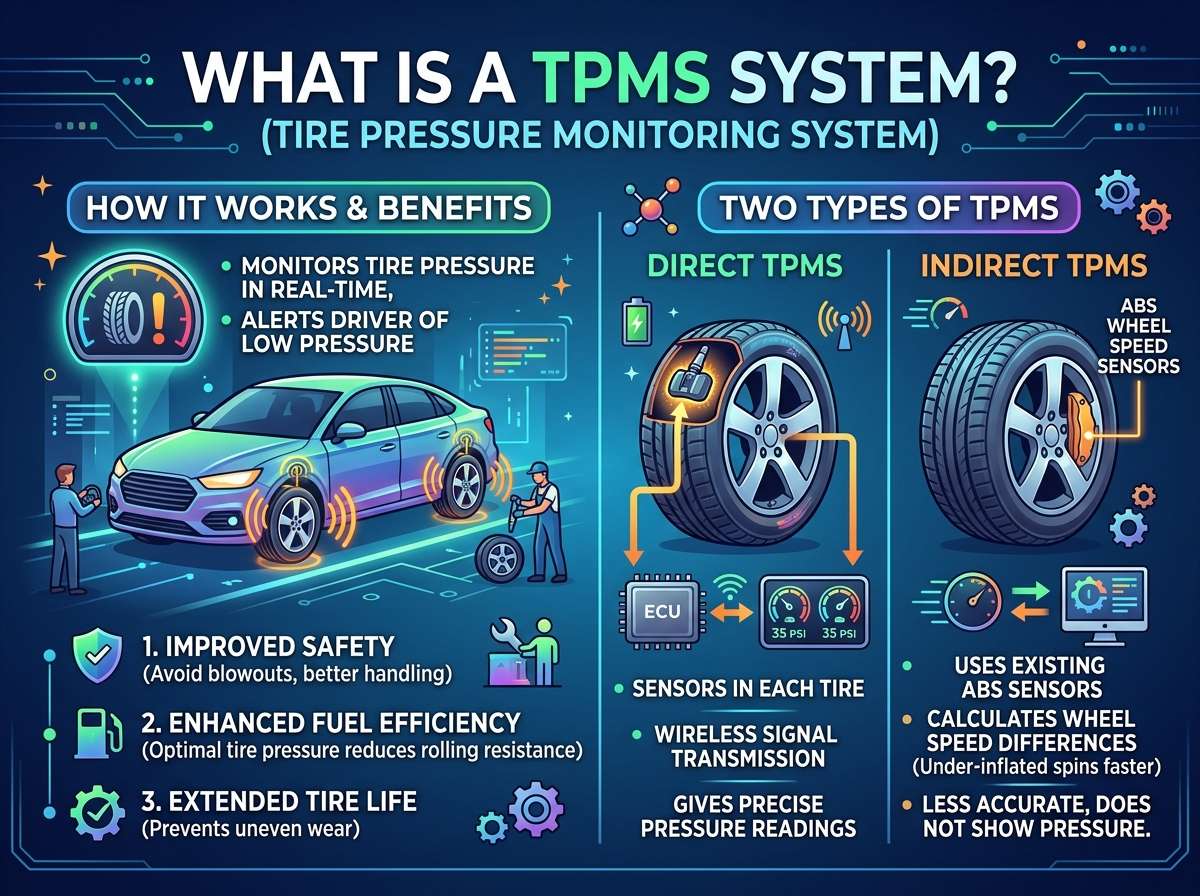
Each tire has a small sensor mounted on the inside of the wheel or inside the tire itself. These sensors are pressure-sensitive devices that measure the air pressure in your tire continuously. When you drive, these sensors stay active and send pressure readings to your car’s computer system.
The sensors are battery-operated and send wireless signals to the vehicle’s receiver. They work hard every single day, monitoring pressure changes as you drive, brake, turn, and navigate different road conditions.
The Receiver Unit
Your car has a receiver module that picks up signals from all the tire sensors. This receiver acts like a central hub, collecting data from each tire and comparing it against safe pressure levels. The receiver lives in your vehicle’s electrical system, usually hidden behind your dashboard or integrated into your car’s computer brain.
When the receiver gets a signal showing that tire pressure is outside the safe range, it springs into action and triggers that warning light on your dashboard.
The Dashboard Light
That little tire warning light you see on your dashboard is the final piece of the puzzle. When your TPMS detects a problem, the light comes on to grab your attention. Some modern systems show you exactly which tire has low pressure, while older systems just give you a general alert.
Why TPMS Matters for Your Safety
Your tire pressure isn’t just about keeping your tires looking firm. It directly affects how safely your car handles the road.
Fuel Economy Benefits
When your tires have the right pressure, they roll easier and more smoothly down the road. This means your engine doesn’t have to work as hard to keep your car moving, which uses less fuel. Underinflated tires create extra friction, forcing your car to burn more gas to get you where you need to go.
By keeping your tire pressure where it should be, you’ll see fewer visits to the gas pump and save money over time. That’s a win for both your wallet and the environment.
Better Handling and Control
Proper tire pressure gives you better control over your car, especially during turns and sudden maneuvers. When your tires have the correct pressure, they grip the road better and respond faster to your steering inputs. This becomes even more critical when driving in rain, snow, or on slippery surfaces.
Underinflated tires can cause your car to feel sloppy and sluggish, making it harder to steer and brake precisely. Overinflated tires create the opposite problem—they become stiff and don’t grip the road as well, reducing your traction.
Tire Wear and Lifespan
Think about your tires as an investment. Proper pressure helps your tires wear evenly across the entire surface, extending their lifespan significantly. When pressure is wrong, tires wear faster and unevenly, forcing you to replace them sooner and spend more money.
A TPMS system helps you keep your tires at the sweet spot where they last longest, giving you the best value for your tire investment.
Safety During Emergencies
In emergency situations—like swerving to avoid an obstacle or making a sudden stop—your tires are your only contact with the road. Correct tire pressure ensures your tires can respond instantly to your commands without slipping or losing grip. This could be the difference between a safe maneuver and a dangerous accident.
Two Types of TPMS Systems
Not all TPMS systems work exactly the same way. There are two main approaches that automakers use.
Direct TPMS Systems
A direct TPMS system uses individual pressure sensors installed inside each tire. These sensors measure the actual pressure in the tire and send the real data wirelessly to your car’s receiver.
The big advantage of direct systems is accuracy. Because each tire has its own dedicated sensor, you get true readings from each one. Many direct systems can even tell you which specific tire has a pressure problem, not just that something’s wrong.
The downside is that these sensors contain batteries that eventually die. Replacing a failed sensor typically costs more money than maintaining the system, and you’ll need to replace sensors periodically throughout your car’s life.
Indirect TPMS Systems
An indirect TPMS system works differently. Instead of actual pressure sensors, it uses your car’s anti-lock brake system (ABS) sensors to detect changes in wheel speed and rotation patterns.
Here’s the logic: when a tire loses pressure, it becomes slightly smaller and rotates faster than a properly inflated tire. The indirect system spots this difference in rotation speed and alerts you to a potential problem.
Indirect systems cost less to maintain because they don’t require replacement sensors with dying batteries. They use existing equipment already on your car for other safety purposes.
The tradeoff is that indirect systems are less precise. They can tell you when something’s probably wrong, but they can’t tell you the exact pressure or pinpoint which tire has the problem as easily.
When Should the TPMS Light Come On?
Your TPMS warning light should only come on when your tire pressure is genuinely outside safe ranges. Understanding when it should trigger helps you know whether your system is working properly.
Low Pressure Alerts
Most TPMS systems are set to alert you when tire pressure drops about 25% below the vehicle manufacturer’s recommended pressure. For example, if your car calls for 32 pounds per square inch (PSI), the alert might trigger around 24 PSI.
This threshold keeps you safe without sending false alarms every time you lose a tiny bit of pressure. In cold weather, your tire pressure naturally drops because cold air takes up less space, so the system is smart enough to handle these normal fluctuations.
High Pressure Alerts
Some modern TPMS systems also monitor for overinflated tires, though this is less common than low-pressure alerts. Overinflated tires wear faster in the center and provide less grip, so catching this problem is valuable for safety and tire life.
Temperature Effects
Temperature changes affect tire pressure significantly. During cold weather, tire pressure drops because the air inside contracts. During hot weather, pressure increases as the air expands. A good TPMS system accounts for these normal temperature-related changes and doesn’t freak out over them.
What to Do When Your TPMS Light Comes On
When that tire warning light shows up on your dashboard, don’t panic. Follow these simple steps to handle it right.
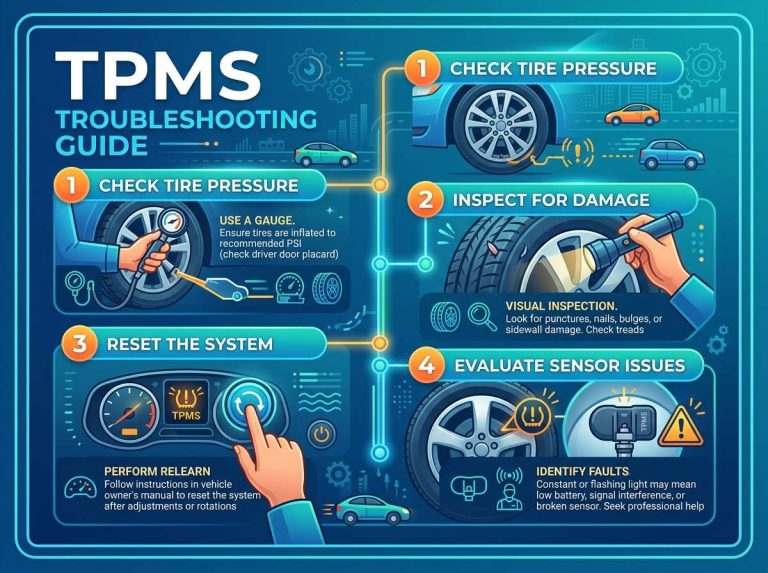
Step One: Check the Tire Pressure
Get a tire pressure gauge from an auto parts store or gas station and check the pressure in all four tires. Many gas stations have free air pumps and pressure gauges you can use. Write down the readings from each tire.
Compare your readings to the recommended pressure listed on your driver’s door jamb or in your owner’s manual. This shows you exactly what your car needs.
Step Two: Add Air if Needed
If your tires are low, use an air compressor to add air until you reach the recommended pressure. Don’t overshoot—stop when you hit the right number. If you’re at a gas station, most attendants can help you add air if you ask.
Step Three: Wait and Watch
Sometimes it takes a few miles of driving before the TPMS light goes off after you’ve corrected the pressure. The sensors send updated readings, and your car’s computer processes the new information. The light should disappear within a few miles of driving.
Step Four: Check for Leaks
If your tire pressure keeps dropping and coming back, you probably have a slow leak. This could come from a puncture, a valve stem problem, or a wheel seal issue. Take your car to a tire shop so they can find and fix the leak.
Common TPMS Problems and Solutions
Like all car systems, TPMS can develop problems. Let’s look at what might go wrong and how to fix it.
Sensor Battery Failure
TPMS sensors have built-in batteries that last typically 5-10 years. When a battery dies, the sensor stops transmitting pressure readings, and your car loses the ability to monitor that tire.
You’ll know this is happening because the TPMS light stays on even when your tire pressure is correct. A mechanic can replace the failed sensor, which usually costs between $150-$300 per sensor depending on your car.
Faulty Receiver Module
Sometimes the problem isn’t the sensors—it’s the receiver that’s supposed to pick up their signals. If the receiver fails, the whole system stops working, and you get a constant warning light.
Diagnosing a bad receiver requires a mechanic’s tools, but they can test it and confirm whether replacement is needed.
Environmental Interference
Electronic devices, power lines, and other wireless signals can sometimes interfere with TPMS signals. This is rare but can cause false alerts or system glitches. Moving your car away from the source of interference usually solves it.
Damaged Sensors
Hitting a pothole hard, driving over road debris, or getting hit in the wheel area can damage a TPMS sensor. Physical damage might crack the sensor or knock it loose, causing signal loss. Replacement is the solution here.
TPMS and Seasonal Changes
As seasons change, your TPMS will work overtime because temperature swings directly affect tire pressure.
Winter and Cold Weather
Cold temperatures make air shrink, so tire pressure drops in winter. This is completely normal. Your TPMS might alert you during the first cold snap of winter, but don’t worry—just add a little air to bring pressure back up.
Some drivers add a few extra PSI in winter to account for the expected pressure drop, but don’t go overboard. Stay within the manufacturer’s recommendations.
Summer and Hot Weather
Hot weather has the opposite effect. Air expands when it gets warm, so your tire pressure climbs higher in summer. This happens naturally and your TPMS will likely alert you less during warm months.
The Rules and Regulations
TPMS systems became mandatory equipment in many countries because safety experts recognize their life-saving potential. Let’s look at the regulatory landscape.
Government Mandates
Many governments now require TPMS on all new vehicles. This came about after research showed that proper tire pressure prevents accidents and saves lives. The regulations ensure that all new cars have this safety feature protecting drivers and passengers.
Your Responsibility as a Driver
Even though your car has a TPMS system, you’re still responsible for maintaining proper tire pressure. The TPMS tells you when something’s wrong, but actually fixing it is your job. Ignoring warning lights and letting your tires stay under-inflated puts you and others at risk.
TPMS Maintenance Tips
Keeping your TPMS in good working condition doesn’t require much effort, but it does need your attention.
Regular Pressure Checks
Check your tire pressure at least once per month using a good quality gauge. This catches problems early before your TPMS light comes on. You’ll develop a feel for normal pressures and spot changes immediately.
Protect Your Sensors
When you get new tires, ask the tire shop to carefully reuse your existing TPMS sensors if they’re in good condition. This saves money compared to buying new sensors.
If you need to replace a sensor, do it right away. Driving on an unmonitored tire removes your early warning system for that wheel.
Choose Quality Repairs
When your TPMS needs service, choose a reputable mechanic who knows these systems well. TPMS work is relatively simple, but it requires proper tools and knowledge to do correctly.
The Future of TPMS Technology
TPMS systems continue to evolve and improve. Let’s look at what’s coming next.
Predictive Systems
Future TPMS systems will predict pressure problems before they happen. By analyzing trends in pressure changes, the system will alert you to slow leaks days or weeks before they become critical.
Integrated Warning Systems
Modern cars integrate TPMS with other safety systems. The car might automatically adjust handling characteristics when it detects a pressure problem, helping you maintain control.
Better Data Display
Cars are showing more detail about tire pressure right on the dashboard display. Instead of just a warning light, you might see a screen showing the exact pressure in all four tires at a glance.
Comparing TPMS to Manual Monitoring
Before TPMS became standard, drivers had to manually check tire pressure using a gauge. Let’s see how the automated system compares.
Convenience
TPMS alerts you automatically without you having to remember to check. It catches problems you might miss if you’re not looking regularly.
Peace of Mind
Knowing your system is watching your tires 24/7 gives you confidence. You can drive without worrying whether you remembered to check pressure last week.
Cost Tradeoff
TPMS adds cost to vehicle purchase and occasional maintenance expense. Manual checking costs nothing except your time and effort. Whether that tradeoff is worth it depends on your lifestyle and priorities.
Real-World Scenarios Where TPMS Saves the Day
Understanding how TPMS helps in actual driving situations brings home why the technology matters.
Scenario One: The Slow Leak
A driver gets a small puncture from a nail but doesn’t feel it. Over days, air gradually seeps out. Without TPMS, this driver might not notice until the tire is dangerously flat, possibly while driving on the highway. With TPMS, the alert comes when the pressure just starts dropping, giving plenty of time to add air or get repairs.
Scenario Two: Cold Morning Surprise
A driver goes out on a cold winter morning. Temperature dropped 40 degrees overnight, and tire pressure dropped along with it. The TPMS light comes on, alerting the driver to check pressure. After a simple adjustment, everything’s fine. Without TPMS, the driver might have started a highway trip on underinflated tires without realizing it.
Scenario Three: The Forgotten Pump
A driver stops at a gas station and accidentally over-inflates the tires by 10 PSI, then drives away. The TPMS might alert the driver to the overpressure, or if the system doesn’t monitor high pressure, the driver at least knows something’s off when the light comes on. Without TPMS, this driver might never notice, leading to excessive wear and poor handling.
Common Myths About TPMS
Let’s bust some common misconceptions about tire pressure monitoring systems.
Myth One: TPMS Replaces Tire Maintenance
False. TPMS is a monitoring tool, not a maintenance tool. It tells you when something’s wrong but doesn’t fix anything. You still need to maintain your tires through regular pressure checks, rotations, and replacements when worn.
Myth Two: All TPMS Systems Work the Same
False. As we discussed, direct and indirect systems work quite differently. Some give precise readings; others provide general alerts. Your car’s system depends on the manufacturer and model.
Myth Three: TPMS Light Always Means Low Pressure
Sometimes yes, sometimes no. The light comes on for various reasons—low pressure, high pressure, sensor failure, or receiver problems. Always check pressure before assuming the worst.
Myth Four: Ignoring TPMS Light Is Safe
Absolutely false. Your tires are the only thing between your car and the road. Ignoring pressure warnings puts you at risk of accidents, blowouts, and loss of control.
How to Explain TPMS to Others
If friends or family ask you about TPMS, here’s a simple explanation that works for anyone.
“Your TPMS is like a health monitor for your tires. It measures the air pressure in each tire and alerts you when something’s wrong. Just like a fitness tracker warns you about unhealthy patterns, TPMS warns you about tire problems before they become serious. It helps you keep your tires healthy, which keeps you safe on the road and saves you money on fuel and replacements.”
Key Takeaways About TPMS Systems
Let’s recap the essential points about TPMS that every driver should know.
Your TPMS is a safety system that monitors tire pressure and alerts you to problems. It works through sensors in each tire that send wireless signals to your car’s receiver. When something’s off, the dashboard light comes on and tells you to check your tires.
There are two types: direct systems with actual sensors in each tire, and indirect systems that use anti-lock brake system sensors to detect pressure problems. Both have advantages and work well when maintained properly.
Regular pressure checks keep you ahead of problems. When the TPMS light comes on, don’t panic—just check your tire pressure, add air if needed, and the light should go off shortly. If it stays on, you might have a sensor or receiver problem that needs professional attention.
Temperature changes affect tire pressure, especially in winter when cold weather naturally lowers pressure. This is normal, and you just add air when needed.
Ignoring TPMS warnings is dangerous. Your tires are critical safety equipment, and proper pressure matters for handling, braking, and accident prevention.
Getting the Most Out of Your TPMS System
To get maximum benefit from your TPMS, develop good habits around tire maintenance.
Check your tire pressure monthly using a quality gauge. Write down the readings so you can spot trends. If pressure is consistently dropping, you have a leak that needs fixing.
Know the recommended pressure for your specific car—it’s on your driver’s door jamb or in your manual. Fill to that pressure, not to the maximum pressure listed on the tire sidewall (that’s the maximum safe pressure, not the recommended pressure).
When you get new tires, ask the shop to transfer your existing TPMS sensors if they’re working properly. This saves money and keeps your system functioning.
Respond quickly when your TPMS light comes on. The earlier you catch a problem, the easier and cheaper it is to fix.
Treat your TPMS sensors carefully during tire rotations and replacements. These devices aren’t indestructible, and careless handling can damage them.
Conclusion: Your Silent Safety Guardian
Your TPMS system works quietly in the background, watching your tire pressure day and night, year after year. It’s one of those safety features that you might not think about until something goes wrong, but when you do need it, you’ll be glad it’s there.
Understanding how TPMS works and what it does helps you use it effectively. By responding to alerts promptly, checking pressure regularly, and maintaining your sensors properly, you’ll get maximum safety and value from this important system.
Your tires might not be the most exciting part of your car, but they’re absolutely the most critical. They’re your only contact with the road, and their health determines your safety in countless driving situations. A TPMS system is a simple, smart tool that helps keep those tires in perfect condition, protecting you, your passengers, and everyone else on the road.
So next time that tire light pops up on your dashboard, instead of groaning about it, remember that your TPMS is just doing its job—keeping you safe one pressure reading at a time.

Peterson is an automotive safety enthusiast and product reviewer with a passion for helping drivers stay safe on the road. He researches and tests dash cams, backup cameras, TPMS systems, emergency tools, GPS trackers, and other vehicle safety products to provide honest, practical recommendations. Through CarSafeties.com, Peterson shares in-depth reviews, buying guides, and maintenance tips to help drivers make smarter and safer decisions.