Passive vs Active Car Security Systems
Your car is likely one of the biggest investments you’ll ever make. It sits in your driveway, in parking lots, and on the street while you go about your day. You want to know that it’s safe from thieves and vandals, right? That’s where car security systems come into play. Today, we’re going to break down the difference between passive and active car security systems so you can protect your vehicle like a pro.
In this article
What Is Car Security and Why Should You Care?
Let’s start with the basics. Car security refers to any technology or system designed to protect your vehicle from theft, break-ins, and other criminal activity. Think of it like a bodyguard for your car. Some of these systems work automatically without you doing anything, while others require you to actively turn them on and use them.
The reason you should care? Car theft happens every single day. Thieves are always looking for easy targets. If your car sits without any protection, it becomes an attractive prize. A solid security system doesn’t just protect your vehicle. It can also lower your car insurance premiums, keep your belongings safe, and give you peace of mind when you park your car anywhere.
Breaking Down Passive Car Security Systems
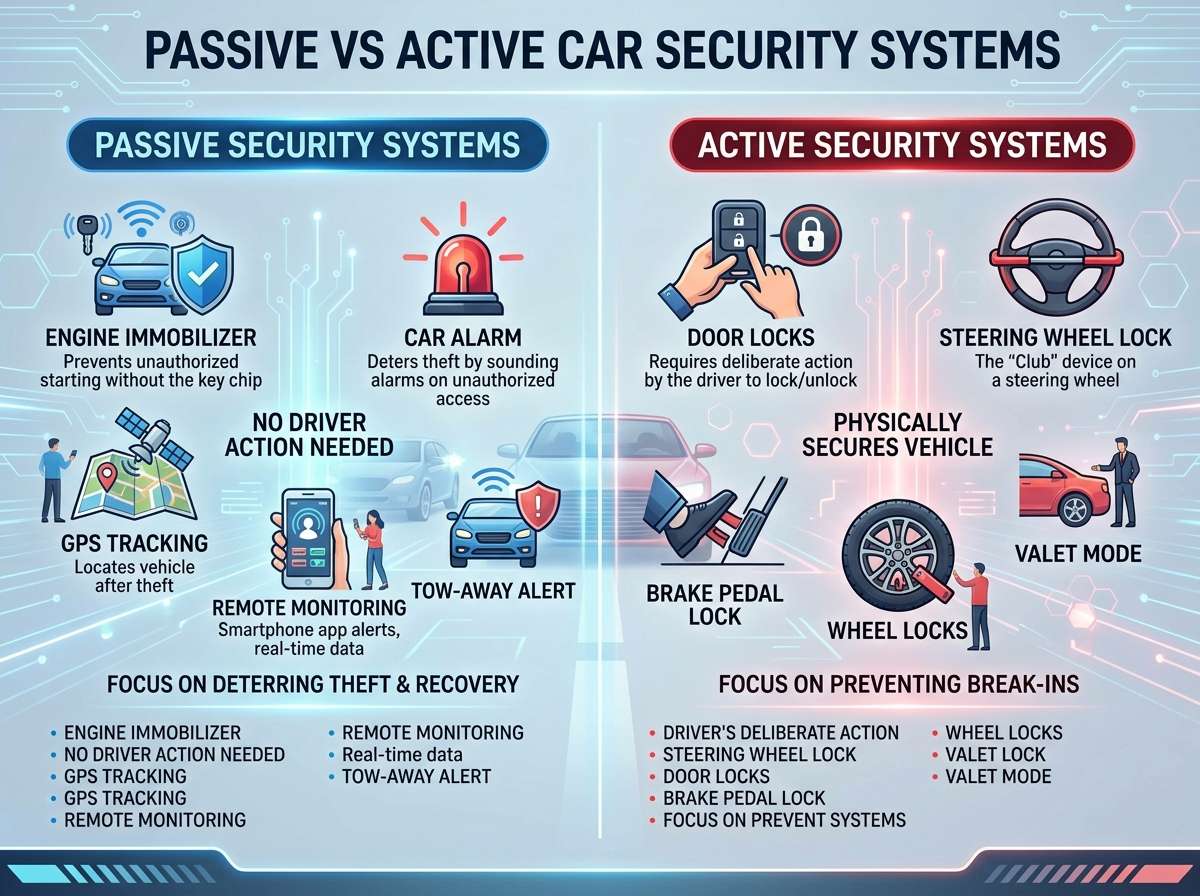
Passive car security systems are like your car’s invisible guardian. They work on their own, without you having to do a single thing. You don’t need to remember to turn them on, and you don’t need to press any buttons. They just run automatically whenever you’re not driving.
How Passive Security Systems Work
These systems spring into action the moment you turn off your engine and lock your doors. They work silently in the background, monitoring your vehicle around the clock. The best part? You don’t have to think about them. They’re always there, always working, always protecting.
Common Types of Passive Car Security Features
Door Locks and Central Locking Systems
Modern cars come with central locking systems that lock all doors at once. You press a button on your key fob, and every door locks automatically. This is far better than the old days when you had to walk around and lock each door by hand. Some cars even lock doors automatically when you start driving or when the vehicle detects that you’re walking away.
Steering Wheel Locks
The steering wheel lock is one of the oldest passive security devices around. When you turn off your engine, a bolt locks the steering wheel into place. A thief might be able to start your car without the key (with enough time and skill), but they won’t be able to steer it. This makes stealing your car way more difficult and time-consuming, which often means they’ll move on to an easier target.
Automatic Window Closers
Did you know that your car windows might close automatically when you lock your vehicle? Many modern cars have this feature built in. It’s a small but effective way to prevent thieves from reaching in and unlocking your doors by hand.
Immobilizer Technology
The engine immobilizer is one of the most important passive security features in any car. Your key has a special chip inside it. When you insert your key into the ignition, the car’s computer checks if that chip matches the car’s security code. If it doesn’t match, the engine simply won’t start. Even if a thief gets your keys, they’d need to get the right code into the car’s computer. This single feature has reduced car thefts dramatically around the world.
GPS Tracking Systems
Some cars come with built-in GPS tracking. This passive system keeps tabs on your vehicle’s location at all times. If your car gets stolen, the police can track it down quickly. Some systems even let you check your car’s location from your phone whenever you want.
Auto-Locking Doors
Many newer vehicles have doors that lock automatically after you start driving or a few seconds after you close the door. This prevents carjackers from opening doors while you’re stopped at a red light. It’s a simple but smart feature that keeps you safer while you’re on the road.
Engine Cutoff Switches
Some passive systems include a fuel pump cutoff or ignition cutoff switch. If someone tries to hotwire your car, one of these devices will interrupt the fuel supply or spark plugs, preventing the engine from starting. The thief might get the car running briefly, but it won’t go anywhere.
Understanding the Pros and Cons of Passive Systems
Let’s talk about what makes passive security systems great and what their limitations are.
The Advantages of Passive Car Security
Passive systems are truly set-and-forget technology. Once they’re installed, you never have to worry about forgetting to turn them on. Your car is always protected, whether you’re at home, at work, or at the grocery store. You don’t need to remember a code, push any buttons, or take any action at all.
Since these systems run all the time, they never take a break. A thief doesn’t get a window of opportunity when you forget to activate your security. The protection is constant and reliable. Your insurance company likes this too, which is why passive security features often help lower your premiums.
Installation is usually simple, and many passive features come standard on modern cars. You get protection without extra cost and without any changes to your daily routine.
The Limitations of Passive Systems
The downside is that passive systems can only do so much. They’re designed to stop amateur thieves and prevent opportunistic crimes. A determined professional thief with the right tools can work around many passive security features. They might need more time and skill, but it’s not impossible.
Passive systems also don’t scare thieves away. They work silently, so a thief doesn’t know your car has protection until they try to steal it. By then, it might be too late for the system to alert anyone. The alarm won’t go off, the lights won’t flash, and nobody around you will know that someone just tried to break into your car.
Exploring Active Car Security Systems
Active car security systems are the loud, flashy cousins of passive security. These systems make noise, flash lights, and send alerts when they detect suspicious activity. They require you to arm and disarm them, but they offer a higher level of protection and deterrent.
How Active Security Systems Work
Active systems sit idle until you turn them on. Once armed, they monitor your vehicle for any signs of trouble. If someone tries to open a door, break a window, or tamper with your car, the system detects it and springs into action. Alarms sound, lights flash, and you get notified right away.
Common Types of Active Car Security Features
Car Alarm Systems
A car alarm is the classic active security device. When armed, it monitors your doors, windows, and trunk. If a thief tries to open any of these, the system triggers a loud siren. The noise is deafening and draws attention from anyone nearby. Most thieves will run away immediately when an alarm goes off. They don’t want that kind of attention.
Some advanced alarms use motion sensors that detect movement inside or around your car. They might also respond to vibrations, detecting if someone tries to break a window or shake the vehicle.
Key Fob Panic Buttons
Many car alarm systems include a panic button on your key fob. If you feel threatened or see someone trying to steal your car, you press this button. Your car’s alarm sounds, and sometimes the lights flash too. This alerts people nearby and scares off potential thieves.
Smart Mobile Alerts
Modern active systems send notifications to your phone when triggered. You get a text message or app alert telling you that your car’s alarm went off. Some systems let you view a camera feed or listen to audio from your car. You can even disarm the alarm remotely if you triggered it by mistake.
Engine Disabling Systems
Some active systems include an engine disabler. If someone breaks in and tries to start your engine, the security system cuts the fuel supply or disables the ignition. You can only re-enable it with your key fob or mobile app. This means a thief can get inside your car, but they can’t drive it away.
Steering Wheel and Brake Pedal Locks
These active devices physically lock your steering wheel or brake pedal when you arm your security system. Unlike passive steering wheel locks that engage automatically, active locks are manually set by a security system. They’re visible and serve as a strong visual deterrent.
Proximity Sensors
Active proximity sensors detect when someone gets close to your vehicle. If you’re parked in a public lot and someone walks up to your car, the system can alert you on your phone. You’ll know immediately if someone is scoping out your vehicle.
Car Security Cameras
Some cars have security cameras installed around the exterior. When you arm your system, these cameras record anyone who comes near your car. If a theft or vandalism occurs, you have video evidence for the police.
The Benefits and Drawbacks of Active Systems
Active security systems offer benefits that passive systems simply can’t match, but they also have their own set of challenges.
Why Active Systems Excel
The biggest advantage is the deterrent factor. A visible alarm sticker on your windshield tells thieves to look elsewhere. When a thief sees flashing lights and hears a blaring siren, they know your car is serious about security. They’ll almost certainly move on to an easier target.
Active systems give you real-time information. You know immediately when something’s wrong. You can contact police right away, or you can check on your car from your phone if you’re worried about it. Some systems even let you see who’s trying to steal your car.
Remote capabilities are powerful. Many active systems let you lock doors, start your engine, or disable the ignition from anywhere using your phone. If you ever can’t remember whether you locked your car, you can check and lock it remotely.
The Challenges with Active Systems
You have to remember to arm your system every time you park. Forget one time, and your car is unprotected. Many people find this annoying over time, and they might stop arming their system consistently.
False alarms can be a real problem. A passing car backfires. Wind blows something against your vehicle. Your pet jumps around inside. Any of these things might trigger your alarm. Your neighbors won’t appreciate constant noise at night, and you might face fines for repeat false alarms in some areas.
Active systems cost more than passive systems. Not all cars come with them standard, so you might need to buy and install one yourself. This adds to your overall vehicle expenses. Installation can also be complicated and might require professional help.
Maintenance is required. Batteries in your key fob run out. Sensors need replacement. Wiring can fail. You can’t just ignore these systems like you might with passive devices. They require attention and care.
Passive Security vs Active Security: A Direct Comparison
Let’s line these two up side by side so you can see the key differences.
Cost
Passive systems are usually cheaper or even included in your vehicle. Active systems cost more upfront and might require professional installation.
Ease of Use
Passive systems require zero effort. Active systems need you to remember to arm them.
Deterrent Effect
Passive systems work silently. Active systems make noise and draw attention, scaring thieves away immediately.
Real-Time Alerts
Passive systems don’t alert you to problems. Active systems notify you on your phone right away.
Maintenance
Passive systems need little maintenance. Active systems need regular care and attention.
Effectiveness Against Professional Thieves
Both systems can be overcome by skilled thieves, but active systems offer more layers of protection.
Insurance Benefits
Both help lower insurance premiums, though active systems might give bigger discounts.
Which System Should You Choose?
The honest answer is that you shouldn’t have to pick just one. The best approach is to use both passive and active security together. Your car probably comes with passive security already. Adding an active system on top of that creates layers of protection.
Think about your situation. Do you park in a safe neighborhood or a high-crime area? How much are you willing to spend? How important is remote access to you? What about false alarms and neighbor relations?
If you’re on a tight budget and your area is fairly safe, passive security might be enough. If you live in an area with higher theft rates or you want the peace of mind that comes with alerts and remote access, an active system is worth the investment.
Making Your Car Harder to Steal
Beyond passive and active systems, there are other ways to make your car less attractive to thieves.
Park Smart
Always park in well-lit, visible areas. Park in garages when possible. Never leave your car running unattended, even for a few seconds. Parking in consistent locations makes your routine predictable and easier for thieves to exploit.
Don’t Leave Valuables Visible
If a thief looks through your window and sees a laptop, phone, or expensive audio equipment, they’re more likely to break in. Keep valuables hidden or leave them at home.
Use Physical Deterrents
Steering wheel locks, brake pedal locks, and similar devices are visible and scary to thieves. Even though many can be cut off eventually, thieves prefer easier targets.
Install Extra Cameras
Home security cameras that point at your driveway can capture thieves trying to steal your car. Many criminals avoid areas with visible cameras.
Meet Other Security Strategies
A club-style steering wheel lock, a tire lock, or a brake pedal lock all add extra layers of security. Each one makes stealing your car take more time and effort.
The Future of Car Security
Car security technology keeps evolving. Biometric systems that use your fingerprint or face are becoming more common. Some cars can detect when an unauthorized person sits in the driver’s seat and automatically lock down.
Artificial intelligence is making alarm systems smarter. They learn the difference between a real threat and a harmless noise. This reduces false alarms while catching actual break-in attempts. Some systems can even identify known thieves based on facial recognition.
Connected car technology lets manufacturers monitor vehicles remotely. If your car is stolen, the company can locate it, unlock it, or disable it without your involvement. This is a game-changer for recovery.
Answering Common Questions About Car Security
Can thieves bypass security systems?
Yes, determined and skilled thieves can bypass most systems. However, every layer of security you add makes your car a less attractive target. A thief will move on to an easier victim.
Do I need both passive and active security?
You most likely already have passive security in your car. Adding active security on top makes your car significantly harder to steal. Together, they offer the best protection.
Will a security system lower my insurance?
Many insurance companies offer discounts for both passive and active security features. Check with your insurer to see what discounts you qualify for. These discounts might offset the cost of installing an active system.
How do I choose a good alarm system?
Look for systems with professional monitoring, mobile alerts, and good reviews. Make sure the installation is done by trained professionals. Ask your dealer or insurance company for recommendations.
Are aftermarket systems as good as factory systems?
Quality varies widely among aftermarket systems. Some are excellent, while others are poorly made. Do your research, read reviews, and buy from reputable manufacturers. Factory systems are usually more reliable and easier to use, but aftermarket options can be more affordable.
What should I do if my car is stolen?
Call the police immediately and report it stolen. Provide them with your vehicle identification number (VIN), description, and any tracking information from your security system. If your car has a GPS tracker or remote engine disabler, work with police to recover it. Contact your insurance company right away to report the theft.
Final Thoughts on Protecting Your Vehicle
Your car deserves protection, and you deserve peace of mind. Passive car security systems provide a solid foundation of automatic protection that works constantly. They’re included in virtually every modern car and require zero effort on your part.
Active car security systems add an extra layer of protection through visible deterrents, alarms, and remote monitoring. They require you to arm them consistently, but they offer better protection against determined thieves and give you real-time alerts.
The best approach is to use both. Start with the passive systems your car already has, and consider adding an active system if you live in a high-crime area or own an expensive vehicle. Combine these systems with smart parking habits, physical deterrents, and awareness of your surroundings, and you’ll have a comprehensive security strategy.
Car theft is a real problem, but it doesn’t have to happen to you. Take action today to protect your vehicle. Whether you stick with passive systems or invest in active protection, you’re taking a smart step toward keeping your car safe from thieves. Your car—and your wallet—will thank you for it.
Remember, the best security system is the one you’ll actually use consistently. If you choose an active system but forget to arm it half the time, you’re not getting the protection you paid for. Be honest about what you’ll stick with, and choose accordingly. Your future self will appreciate the peace of mind that comes from knowing your car is truly protected.
Peterson is an automotive safety enthusiast and product reviewer with a passion for helping drivers stay safe on the road. He researches and tests dash cams, backup cameras, TPMS systems, emergency tools, GPS trackers, and other vehicle safety products to provide honest, practical recommendations. Through CarSafeties.com, Peterson shares in-depth reviews, buying guides, and maintenance tips to help drivers make smarter and safer decisions.